The Tokenization of Everything: How RWAs Are Changing Retail Trading
Why do some support levels hold like a fortress while others shatter instantly? The answer isn't in the price—it’s in the volume. Discover how to use Volume Profile to identify where institutions are "building their positions," the significance of the Point of Control (POC), and why trading in "Low Volume Nodes" is a recipe for disaster.
For the last decade, the cryptocurrency market has largely existed in its own isolated bubble. Retail traders speculated on digital-native assets like Bitcoin, Ethereum, and a sea of altcoins. But a massive shift is currently underway. The blockchain is no longer just for digital money; it is being used to digitize the physical world.
This mega-trend is known as the Tokenization of Real-World Assets (RWAs), and it is poised to completely disrupt how retail investors interact with traditional financial markets. Here is what you need to know about the RWA revolution.
What is RWA Tokenization?
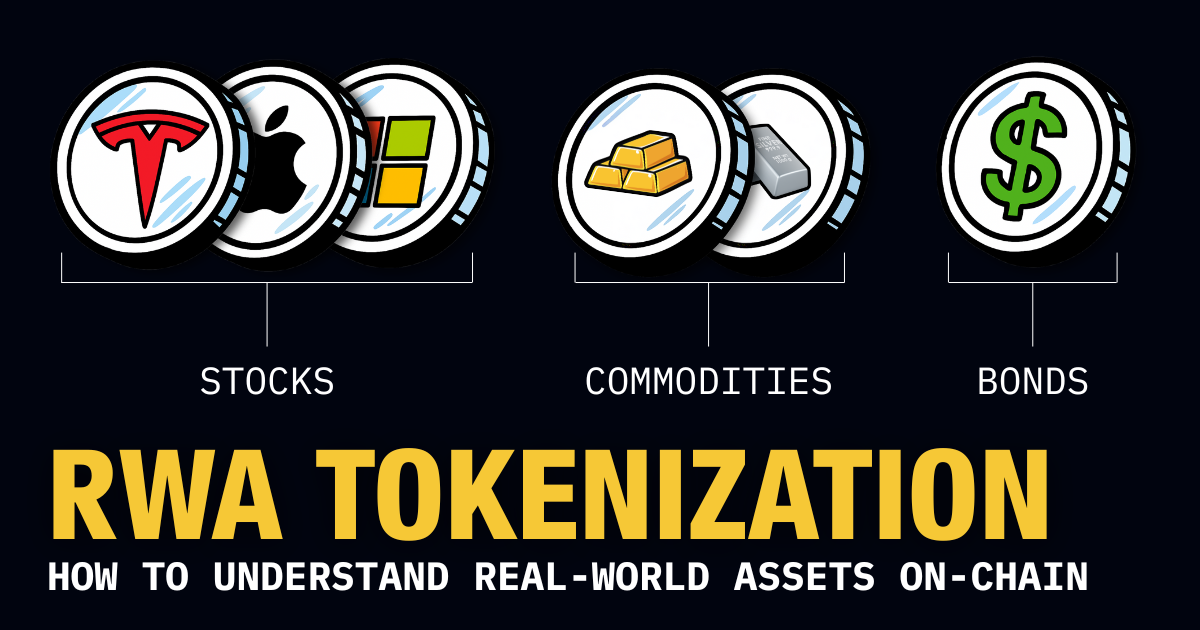
In simple terms, tokenization is the process of taking a physical asset—like a commercial skyscraper, a piece of fine art, a Rolex watch, or even US Treasury bills—and representing its ownership as digital tokens on a blockchain.Instead of dealing with piles of legal paperwork, brokers, and massive capital requirements, ownership is converted into a smart contract. Whoever holds the digital tokens in their crypto wallet legally owns a proportional share of that real-world physical asset.
Why is This a Game Changer for Retail Traders?
1. The Power of Fractional Ownership Historically, high-yield alternative assets were reserved for the ultra-wealthy. You couldn't invest in a $50 million commercial real estate project unless you were an accredited investor with massive capital. Tokenization breaks these massive assets into millions of affordable, bite-sized pieces. Today, a retail investor can buy $50 worth of a tokenized Manhattan apartment building and instantly start receiving a proportional share of the monthly rental yield directly to their digital wallet.
2. 24/7 Liquidity for Illiquid Assets Selling physical real estate or fine art traditionally takes months, involving realtors, lawyers, and massive escrow fees. By putting these assets on a blockchain, they inherit the liquidity of the crypto markets. You can trade a tokenized share of a rare vintage car or a private equity fund at 2:00 AM on a Sunday, instantly, with near-zero transaction fees.
3. Blending Yields We are now seeing DeFi (Decentralized Finance) protocols integrate traditional yields. Retail traders are locking up their stablecoins to automatically purchase tokenized US Treasury bills, earning the "risk-free" government interest rate while keeping their capital entirely on the blockchain, ready to be deployed into other trades instantly.
The Major Roadblock: Regulation
While the technology works flawlessly, the legal framework is still catching up. If a token represents a share of a profit-generating company or real estate asset, government agencies like the SEC classify it as a security. Platforms offering these tokens must navigate complex global regulations, which is currently slowing down mainstream adoption in certain countries.
The Future of the Markets
We are moving toward a financial ecosystem where the barrier between traditional markets and digital assets completely dissolves. In the near future, your investment portfolio won't be split between different brokers for stocks, real estate, and crypto. It will all live on a single, unified ledger.The tokenization of everything isn't just a crypto trend; it is the inevitable upgrade of global financial plumbing.
The Wall Street Liquidity Monopoly
The global financial system has always operated on a tiered access model. If you have ₹50,000, you are allowed to buy public stocks or mutual funds. If you have ₹50 Crores, you are invited into the world of Private Equity, Commercial Real Estate, and Private Credit funds.
These elite asset classes consistently outperform public markets with lower volatility, but they suffer from massive illiquidity and astronomical minimum capital requirements. Retail traders have historically been locked out of the best risk-adjusted returns on the planet. RWAs (Real World Assets) are dismantling this wall.
The RWA Solution: Fractional Ownership
Tokenization is the process of taking a physical or traditional financial asset and issuing a digital token on a blockchain that represents a legal fraction of that asset.
The Old Way: Buying a commercial office space in Bangalore requires ₹10 Crores in capital, massive legal overhead, and months of paperwork.
The RWA Way: That same ₹10 Crore building is placed into a legal trust, and 100,000 digital tokens are minted on a blockchain, each priced at ₹1,000.
A retail investor can now buy 50 tokens (₹50,000) and legally own a fraction of the building. The smart contract automatically distributes the monthly rental yield (e.g., 8% APY) directly into the investor's digital wallet in stablecoins, completely bypassing the massive management fees of traditional Real Estate Investment Trusts (REITs).
Beyond Real Estate: The New Asset Classes
The tokenization supercycle is expanding far beyond physical property.
Tokenized US Treasuries: Indian retail investors can now buy digital tokens backed 1:1 by US Government Treasury bills, accessing 5% dollar-denominated yields without needing a foreign brokerage account.
Private Credit: Lending platforms allow retail users to pool their capital to fund multi-million dollar corporate loans, earning double-digit yields that banks normally keep for themselves.
Fine Art & Commodities: Platforms are vaulting physical gold, diamonds, and blue-chip artwork, issuing tokens that allow traders to instantly swap fractions of a Picasso for fractions of a gold bar on decentralized exchanges.
Conclusion: The Convergence of TradFi and DeFi
The era of keeping your "crypto portfolio" separate from your "stock portfolio" is ending. By tokenizing RWAs, the blockchain is becoming the new foundational rail for global finance. For the disciplined retail trader, this means unprecedented portfolio diversification. You no longer have to rely purely on Nifty options or high-beta stocks; you can anchor your wealth in digital, yield-bearing physical assets.
💡 The Illiquidity Warning
A token is only as liquid as the asset backing it. If buyers vanish during a panic, your token's price will still crash. Never confuse "blockchain speed" with true "asset liquidity.
Treat your trading account like an ATM, not a savings account. If you do not sweep your profits out of your margin account at the end of the month, the market will eventually sweep them back into its own pockets. Pay the Core.