The Prop Firm Revolution: How Retail Traders Are Getting Funded
Trading with your own life savings is the "Old Way." It leads to emotional decisions and slow compounding. The "New Way" is leverage without personal liability. Discover the global Prop Firm revolution: how retail traders are passing institutional evaluations, accessing accounts of up to $200,000, and keeping 80% of the profits without risking a single rupee of their own capital.

For a long time, the biggest hurdle for a retail day trader wasn't a lack of skill or strategy—it was a lack of capital. You could have a highly profitable trading system, but if you were only trading with a $1,000 account, making a living from the markets was practically impossible due to the limits of leverage and risk management.
To make big money, you needed big money. But over the last few years, the landscape has completely changed thanks to the massive rise of Online Proprietary Trading Firms (Prop Firms).
Here is a breakdown of why this trend is taking over the retail trading world and what it means for everyday investors.
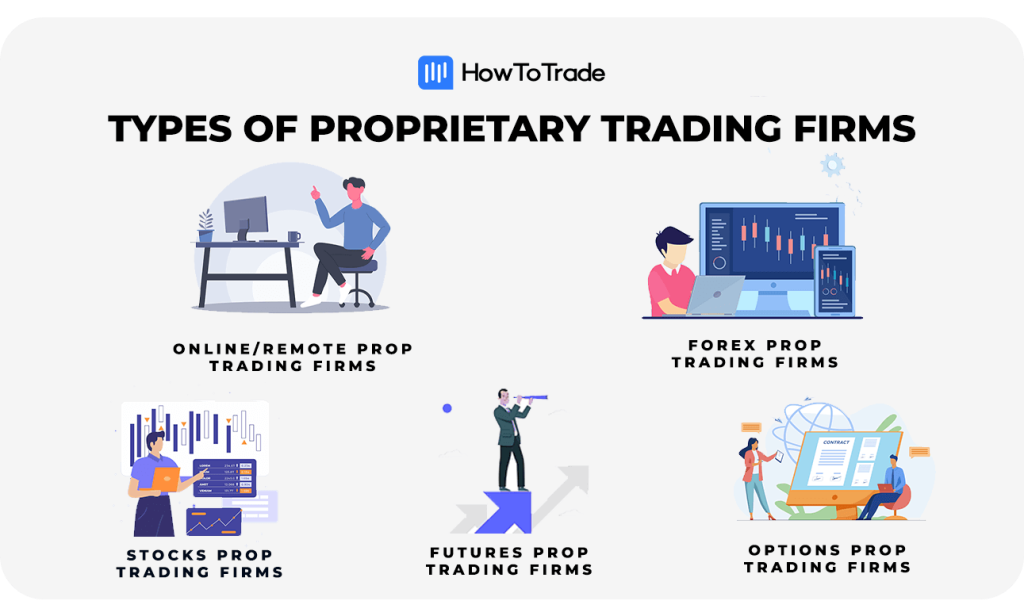
What is an Online Prop Firm?
In the traditional finance world, a proprietary trading firm is a company that hires professional traders to trade the firm's own money, splitting the profits.
The new wave of online prop firms has digitized and democratized this process. Today, anyone with an internet connection can pay a small evaluation fee (usually between $50 and $500) to take a "trading challenge" on a simulated account. If you prove you can hit a specific profit target while following strict risk management rules, the firm will give you access to a "funded" account—often ranging from $50,000 to $300,000.
When you trade that funded account and make a profit, you get to keep 80% to 90% of the earnings, and the firm takes the rest.
Why the Massive Surge in Popularity?
1. Asymmetric Risk The appeal is obvious: you can access six figures of trading capital while your maximum personal downside is just the cost of the initial evaluation fee. If you blow up the funded account, you lose the account, but you are not personally liable for the firm's monetary losses. It completely removes the fear of losing your life savings.
2. Forced Discipline Most retail traders fail because of terrible risk management. Prop firms enforce strict daily loss limits and maximum drawdowns. If your account drops by a certain percentage, you are immediately locked out. While this sounds harsh, it forces traders to abandon reckless gambling and adopt the disciplined, math-based strategies used by professionals.
3. The Gamification of Finance Passing a prop firm challenge has become a badge of honor on social media. Traders stream their evaluation phases, share their "funding certificates," and post their payout proofs. This gamified progression system has brought a massive wave of younger, tech-savvy participants into the futures and forex markets.
The Catch: It Isn’t Easy Money
While the marketing makes it look easy, the reality is that the vast majority of traders fail the evaluation phase. The strict drawdown rules mean that even a minor losing streak can disqualify you. These firms stay in business specifically because the influx of failed evaluation fees pays for the payouts of the small percentage of consistently profitable traders.
The Death of the "Small Account" Grind
For decades, the advice for beginners was: "Start with ₹50,000 and grow it slowly." Mathematically, that is a trap. To make a living wage (e.g., ₹1 Lakh/month) from a ₹50,000 account, you would need a 200% monthly return. That level of risk eventually guarantees an account blow-up.
Proprietary Trading Firms (Prop Firms) have flipped the script. Instead of trading your own money, you pay a small "Evaluation Fee" to prove you are a disciplined trader. If you pass their test, they hand you the keys to a funded account. You keep the majority of the profits; they take the risk.
The Two-Step Evaluation: The Institutional Filter
Prop firms aren't giving away money for free. They are looking for the top 5% of traders who can follow strict risk management rules. Most firms use a two-phase "Challenge":
Phase 1 (The Profit Target): You must reach a profit goal (usually 8-10%) without hitting the drawdown limits.
Phase 2 (The Consistency Test): You must repeat the performance with a lower target (usually 5%) to prove your first win wasn't just a lucky "YOLO" trade.
The Strict Rules of Engagement
What makes prop firm traders better than retail gamblers? The Hard Rules. If you breach any of these, the account is instantly deactivated:
Daily Drawdown (usually 5%): You cannot lose more than 5% of your starting balance in a single day.
Maximum Drawdown (usually 10%): You cannot lose more than 10% of the total account balance at any point.
Minimum Trading Days: You must show a consistent track record over a set period.
Personal Capital vs. Prop Capital: The Math
Feature | Personal Account (Retail) | Prop Firm Account (Institutional) |
Capital | Your Savings (e.g., ₹1 Lakh) | Firm's Capital (e.g., $100k / ₹84 Lakh) |
Risk | 100% Personal Loss | Zero Personal Liability (only fee) |
Psychology | High Stress (Afraid to lose) | Professional (Focused on Rules) |
Profit Potential | Low (Limited by small size) | High (Institutional scaling) |
Payouts | Anytime | 80% to 90% Profit Split |
Why This is an EdTech Goldmine
For platforms like Innoknowvex, the Prop Firm angle is the ultimate "Conversion Tool." You aren't just selling a course; you are selling a career path.
The Message: "We don't just teach you how to trade; we prepare you to pass the $100,000 Funding Challenge."
The Support: Students can use your Master Hub strategies (like the 200-DMA or the R-Multiple framework) specifically to navigate the strict drawdown rules of firms like FTMO, Topstep, or FundedNext.
A New Era
Whether you view them as the ultimate opportunity or a difficult gauntlet, online prop firms have permanently altered the retail trading ecosystem. They have solved the capital problem, allowing talented individuals to scale their strategies faster than ever before.
The only question left is: do you have the discipline to get funded?
Conclusion: Scaling to Seven Figures
The Prop Firm revolution has democratized high-finance. In 2026, a talented trader in a small town in India can manage more capital than a junior hedge fund manager in London. Stop obsessing over how to grow your small savings. Focus on mastering the rules of institutional risk management, pass the evaluation, and trade the capital you deserve.
💡 The "Fee" Mindset
Your evaluation fee is a business license, not a loss. Failure is simply paying for data on your weaknesses. Audit your logs, fix the breach, and return to the simulator before retrying.
The most successful traders in the world do not risk their own net worth. They use institutional capital to scale their strategies. In 2026, your skill is your collateral.