Trading the "Single Expiry" Era: Surviving the Liquidity Funnel
Remember when Dalal Street had an options expiry every single day of the week? Those days are over. With SEBI restricting exchanges to only one weekly derivative expiry per benchmark, the daily retail dopamine hits have stopped. However, this regulatory squeeze has created a massive "Liquidity Funnel." Capital isn't leaving the market; it is concentrating. Learn how to trade the violent, hyper-focused volume spikes that now dominate Thursday and Friday sessions.
The End of the Daily Casino
For a brief period, the Indian stock market became a daily casino. Retail traders would blow up their accounts on FinNifty on Tuesday, reload funds for Bank Nifty on Wednesday, and try to revenge-trade it all back on Nifty 50 on Thursday. It fragmented the market's capital and created unnecessary systemic risk.
SEBI’s mandate to restrict the National Stock Exchange (NSE) and Bombay Stock Exchange (BSE) to a single weekly expiry per benchmark index completely destroyed this daily cycle.
Retail traders are complaining that the market is "boring" now. Institutional quants are celebrating because the market just handed them the deepest, most concentrated liquidity pool in history.
Strategy 1: Surviving the Institutional Stop-Hunt
When you force all the market's capital into a single weekly expiry, the order book becomes incredibly "thick." This means institutions can finally execute ₹500 Crore block trades without causing massive price slippage.
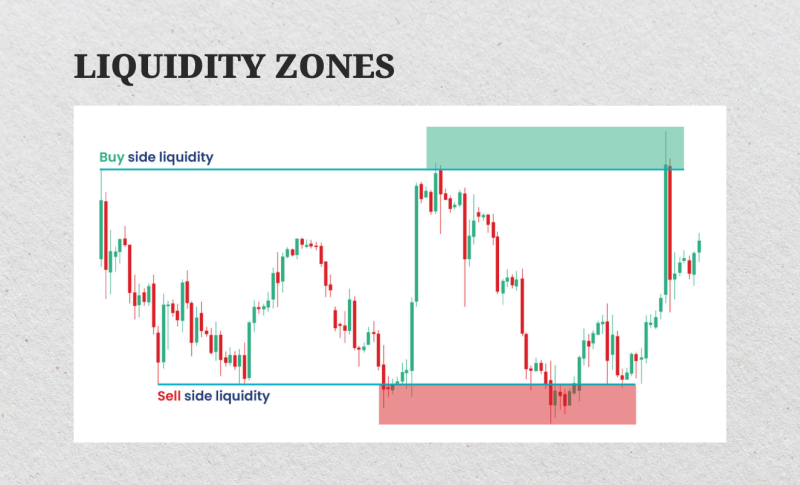
The Danger: Because everyone is trading the exact same chart on Thursday, the Support and Resistance levels become universally obvious. Everyone places their stop-losses at the exact same price.
The Stop-Hunt: Institutional algorithms can see this massive cluster of retail stop-losses. At 1:30 PM, they will intentionally push the market just below the support line to trigger millions of retail sell orders, absorb that liquidity at a discount, and immediately reverse the market higher.
The Execution: Stop placing your stop-losses exactly on the support line. In a Single Expiry era, you must use an ATR (Average True Range) buffer. Give your trades breathing room, or wait for the "fake breakdown" to occur and buy the institutional reversal.
Strategy 2: The European Open Catalyst (1:00 PM IST)
In the old "Daily Expiry" regime, retail volume could artificially drive a minor index (like Midcap Nifty) purely on domestic emotion. In the Single Expiry era, the Nifty 50 is too massive to be moved by retail traders. It requires global macro flows.
The Setup: Thursday mornings are often characterized by tight, sideways "chop." Option sellers are simply decaying the premiums while the market waits for direction.
The Catalyst: At 1:00 PM IST, the European markets open. This is when global institutional flow enters Dalal Street. If Europe opens heavily in the green, foreign algorithms will instantly arbitrage the Nifty 50 upwards.
The Execution: Do not take aggressive directional bets at 10:00 AM on expiry day. Preserve your capital, wait for the European Open to dictate the global trend, and execute your trades at 1:15 PM when the real volume arrives.
Strategy 3: The ELM Squeeze (2:30 PM)
As discussed in the SEBI Purge module, the regulator imposed an Extreme Loss Margin (ELM) penalty of 2% on short option positions on the day of expiry.
The Mechanics: Many retail option sellers enter Thursday with just enough margin to hold their positions. At roughly 2:30 PM, if the market starts moving against them, this 2% ELM kicks in dynamically. Their brokers issue immediate margin calls and forcefully auto-square their positions.
The Alpha: This forced buying/selling by brokers creates violent, unnatural spikes in option premiums in the final hour of trading. If you are capitalized and hold cash reserves, you can step in at 2:45 PM and sell these artificially inflated premiums, pocketing the rapid decay into the 3:30 PM close.
The 2:00 PM Paradigm Shift: Theta vs. Gamma
For the first 5 hours of expiry day, the market is ruled by Theta (time decay). Option sellers are slowly bleeding the premium out of the market. But at 2:00 PM, a mathematical shift occurs. The time value is almost gone, and the market becomes ruled by Gamma.
Gamma measures how fast your option's Delta changes. In plain English: in the final hour of trading, a sudden 40-point move in the Nifty will not just increase an At-The-Money (ATM) option's price; it will cause the price to multiply exponentially. ₹20 premiums can become ₹100 premiums in four minutes.
Retail traders call this the "Zero-to-Hero" trade and blindly gamble their capital on it. Institutional traders call it "Gamma Scalping" and execute it with mathematical precision.
Reading the OI (Open Interest) Wall
Before you execute a late-day directional trade, you must look away from the candlestick chart and look at the Options Chain. You are looking for the "OI Walls."
The Setup: Open your broker's option chain at 1:30 PM. Look for the strike prices with the absolute highest Call Open Interest (Resistance) and Put Open Interest (Support). Let's assume the highest Call OI is at 22,500.
The Psychology: That massive OI represents millions of institutional short positions. If the Nifty approaches 22,500 at 2:15 PM, those institutions are going to defend that level fiercely.
The Execution: You do not blindly buy the breakout. You watch the price action at the OI Wall. If it stalls, you fade it (sell Calls). If the Nifty violently breaches 22,500 and sustains for 5 minutes, a "Short Covering" rally is triggered. Those institutions are forced to buy back their positions, creating a massive Gamma explosion. You buy ATM Calls and ride the wave.
The ATM Gamma Scalp (Defined Direction)
If you correctly identify a Short Covering rally, execution speed is everything.
The Rule: Only trade At-The-Money (ATM) or slightly In-The-Money (ITM) options. They have the highest Gamma exposure.
The Execution: You enter the ATM Call at 2:30 PM. You do not set a target of "double my money." You use a trailing stop-loss in the system. Because Gamma moves so fast, a 1-minute red candle can wipe out 40% of your premium. You are "scalping" the momentum, locking in profits every 10 points the index moves in your favor.
The 3:15 PM Broker Trap
In India, almost all retail brokers forcefully auto-square off intraday (MIS) F&O positions between 3:15 PM and 3:20 PM to prevent delivery defaults.
The Reality: When millions of retail positions are forcefully closed by broker algorithms at the exact same second, the bid-ask spreads go haywire. You will experience massive slippage.
The Rule: An institutional trader's day ends at 3:10 PM on expiry. Never hold an intraday speculative option position into the final 15 minutes of the market. Let the retail brokers and algorithms fight over the remaining pennies.
Conclusion: Patience is the New Alpha
You can no longer trade every single day of the week expecting a 300-point trending move. The Single Expiry era demands patience. Let the market consolidate Monday through Wednesday. Preserve your capital, map the deep liquidity zones, and strike on Thursday afternoon when the global flow aligns with the 2:30 PM margin squeeze.
💡 The Premium Illusion
Don't be fooled by "cheaper" Wednesday ATM premiums. With volume concentrated into a single expiry, the IV curve is hyper-sensitive. A mere 50-point move will trigger massive gamma explosions much faster than before.
The biggest trap of the Single Expiry era is buying cheap, far Out-of-the-Money options in the final hour. Unless the index moves 150 points in a straight line, Gamma will not save you. Theta will crush that ₹5 option to ₹0.05 before you can even hit sell.