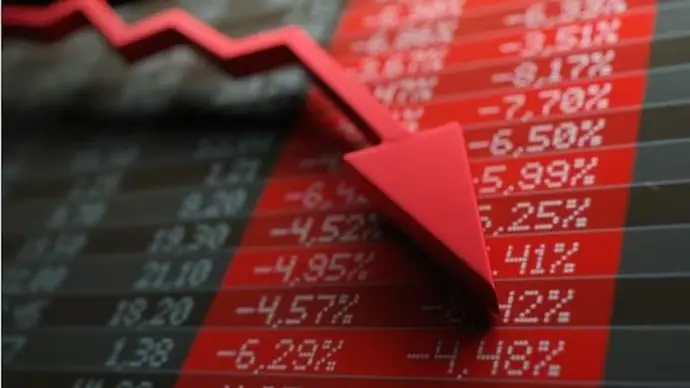
The Sub-23,400 Meltdown: Navigating Nifty’s Worst Losing Streak Since January
The streak is real, and it is brutal. As Nifty 50 slides below the 23,400 mark, retail sentiment has shifted from "Buy the Dip" to "Save the Capital." This isn't just a technical correction; it is a fundamental repricing driven by high crude and an FII exodus. Discover the institutional levels to watch, why the 200-DMA is the ultimate line in the sand, and how to spot the exhaustion signal before the reversal.

The Anatomy of the Slide
Dalal Street is currently witnessing its longest losing streak since January 2026. After months of "up-only" price action, the Nifty has finally breached the psychological and technical floor of 23,400.
For the uninitiated, this feels like a meltdown. For the institutional desk, this is a Mean Reversion. The market was overextended, and the combination of $114 crude oil and a strengthening US Dollar Index (DXY) has finally forced a valuation reality check.
The Technical Breach: 23,400 and Beyond
The 23,400 level wasn't just a random number; it was a cluster of high-volume nodes and a previous swing low. By closing decisively below this, Nifty has officially entered a Short-Term Bear Phase.
The Next Battleground: All eyes are now on the 200-Day Moving Average (200-DMA). Historically, the 200-DMA is where institutional "Big Boys" step in to defend the long-term structural bull market.
The Gap-Down Trap: Avoid the urge to short the market after a massive gap-down. In a losing streak this long, the "Rubber Band Effect" is at its limit. A violent 1-2% short-covering bounce can happen at any moment.
The Macro Triggers: DXY and Crude
Markets do not crash in a vacuum. The current weakness in Indian equities is directly correlated to two terrifying global metrics:
The Dollar Index (DXY) Breakout: The US Dollar has surged, creating a massive headwind for emerging markets. When the Dollar strengthens, foreign capital naturally flows out of risky assets (like Indian midcaps) and back into the safety of US Treasuries.
The Inflation Reality: With crude oil remaining stubbornly high, the market is pricing in a delay in RBI rate cuts. The narrative of "cheap money is coming" has been destroyed. Higher interest rates for a longer duration mathematically compress corporate valuations.
The FII vs. DII Battleground
To understand this meltdown, you must look at the institutional flow data.
The FII Exodus: Foreign Institutional Investors (FIIs) have been relentless net sellers. They are actively derisking their portfolios, taking profits off the table from the 2025 bull run, and moving capital to cheaper geographies like China or back to the US.
The DII Fatigue: Domestic Institutional Investors (DIIs) have tried to hold the line using the billions of rupees pouring in through monthly SIPs. However, when FII selling exceeds ₹5,000 Crores a day, even the mighty domestic SIP book begins to crack under the weight.
Derivatives Data: The Options Chain Squeeze
The technical breakdown is clearly visible in the Options Chain.
Put Writers Run for Cover: A few weeks ago, massive Put Open Interest (OI) sat at 23,500, acting as a trampoline for the market. As the market slid, these Put writers (the bulls) were trapped. Their forced liquidation (short covering on Puts) added aggressive downward momentum to the index.
Call Writers Lower the Ceiling: Institutional Call writers (the bears) are aggressively rolling down their strikes. Resistance has aggressively shifted from 24,000 down to 23,600. Every minor intraday bounce is being ruthlessly sold into by these institutions.
Why "Buy the Dip" is Currently Failing
In a structural bull market, every 100-point dip is a buying opportunity. In a Mean Reversion phase, "buying the dip" is a trap.
Right now, the market is suffering from Overhead Supply. Millions of retail traders bought the index at 23,800, 23,600, and 23,500. They are currently underwater and panicking. The moment the Nifty tries to bounce 1%, these trapped buyers aggressively sell their positions just to "get out at break-even." This constant stream of relief-selling completely kills any upward momentum.
The Institutional Strategy: Defense & Rotation
Until the Nifty reclaims 23,750 on a daily closing basis, the institutional bias remains strictly "Sell on Rallies." Here is the exact playbook to deploy right now:
Cash is a Position: Do not feel pressured to be 100% invested. Institutional portfolios have actively raised cash levels to 30-40%. Holding cash gives you the psychological clarity to survive the drop and the ammunition to buy elite companies when the dust settles.
The 200-DMA Line in the Sand: All eyes are now on the 200-Day Moving Average (200-DMA). Historically, this is where institutional "Big Boys" step in to defend the long-term structural bull market. If you are waiting to deploy your cash, wait to see how price reacts at this vital moving average.
Ruthless Sector Hygiene: High-beta sectors (PSU Banks, Metals, and Real Estate) fall twice as fast as the Nifty during a meltdown. Cut your losers in these sectors if they have breached your stop-losses.
Hide in the Bunkers: Rotate capital into Low-Beta, defensive sectors. Fast Moving Consumer Goods (FMCG) and top-tier Pharmaceuticals act as shock absorbers. People may stop buying houses during a market crash, but they do not stop buying toothpaste and blood pressure medication.
The Institutional Strategy: "Sell the Rise"
Until Nifty reclaims 23,750 on a closing basis, the institutional bias remains "Sell on Rallies."
Portfolio Hedge: If you are heavily long on Midcaps, ensure you are hedged with Nifty Puts or by shorting the USD/INR pair.
Sector Hygiene: Ruthlessly exit laggards in the Paint and Auto sectors that are getting crushed by input costs.
Accumulate Quality: Use this meltdown to slowly build "Satellite" positions in IT and Pharma—sectors that actually benefit from the Rupee depreciation accompanying this crash.
Here is the significantly expanded, deep-dive version of the content field. We are transforming this from a standard market update into a definitive, institutional-grade macro report. This level of depth is exactly what will capture organic search traffic and help drive those active user metrics.
Title: The Sub-23,400 Meltdown: Navigating Nifty’s Worst Losing Streak Since January
Slug: nifty-sub-23400-meltdown-worst-losing-streak-2026
Hero Image: [Asset Link/Placeholder: A dramatic, dark-themed chart of the Nifty 50 showing seven consecutive red candles, with a jagged lightning bolt cracking through the "23,400" horizontal support level. Institutional volume bars are shown heavily in red.]
Excerpt: The streak is real, and it is brutal. As Nifty 50 slides below the 23,400 mark, retail sentiment has violently shifted from "Buy the Dip" to "Save the Capital." This isn't just a technical correction; it is a fundamental repricing driven by macroeconomic shocks, an aggressive FII exodus, and shifting options data. Discover the institutional levels to watch, why the 200-DMA is the ultimate line in the sand, and the exact defensive playbook to survive the worst losing streak of the year.
Publish Date: May 13, 2026
Content:
The Anatomy of the Slide: Why 23,400 Broke
Dalal Street is currently witnessing its most relentless losing streak since the January correction. After months of euphoric "up-only" price action, the Nifty 50 has decisively breached the psychological and technical floor of 23,400.
For the uninitiated retail trader, this feels like an unpredictable meltdown. For the institutional quant desk, this is a textbook Mean Reversion. The market was structurally overextended, and a confluence of global macroeconomic triggers has finally forced a valuation reality check.
The breach of 23,400 was not a subtle slip; it was a high-volume capitulation. This level previously acted as a massive accumulation zone where domestic mutual funds deployed excess cash. Breaking below it means that the selling pressure has officially overwhelmed domestic liquidity.
The Macro Triggers: DXY and Crude
Markets do not crash in a vacuum. The current weakness in Indian equities is directly correlated to two terrifying global metrics:
The Dollar Index (DXY) Breakout: The US Dollar has surged, creating a massive headwind for emerging markets. When the Dollar strengthens, foreign capital naturally flows out of risky assets (like Indian midcaps) and back into the safety of US Treasuries.
The Inflation Reality: With crude oil remaining stubbornly high, the market is pricing in a delay in RBI rate cuts. The narrative of "cheap money is coming" has been destroyed. Higher interest rates for a longer duration mathematically compress corporate valuations.
The FII vs. DII Battleground
To understand this meltdown, you must look at the institutional flow data.
The FII Exodus: Foreign Institutional Investors (FIIs) have been relentless net sellers. They are actively derisking their portfolios, taking profits off the table from the 2025 bull run, and moving capital to cheaper geographies like China or back to the US.
The DII Fatigue: Domestic Institutional Investors (DIIs) have tried to hold the line using the billions of rupees pouring in through monthly SIPs. However, when FII selling exceeds ₹5,000 Crores a day, even the mighty domestic SIP book begins to crack under the weight.
Derivatives Data: The Options Chain Squeeze
The technical breakdown is clearly visible in the Options Chain.
Put Writers Run for Cover: A few weeks ago, massive Put Open Interest (OI) sat at 23,500, acting as a trampoline for the market. As the market slid, these Put writers (the bulls) were trapped. Their forced liquidation (short covering on Puts) added aggressive downward momentum to the index.
Call Writers Lower the Ceiling: Institutional Call writers (the bears) are aggressively rolling down their strikes. Resistance has aggressively shifted from 24,000 down to 23,600. Every minor intraday bounce is being ruthlessly sold into by these institutions.
Why "Buy the Dip" is Currently Failing
In a structural bull market, every 100-point dip is a buying opportunity. In a Mean Reversion phase, "buying the dip" is a trap.
Right now, the market is suffering from Overhead Supply. Millions of retail traders bought the index at 23,800, 23,600, and 23,500. They are currently underwater and panicking. The moment the Nifty tries to bounce 1%, these trapped buyers aggressively sell their positions just to "get out at break-even." This constant stream of relief-selling completely kills any upward momentum.
The Institutional Strategy: Defense & Rotation
Until the Nifty reclaims 23,750 on a daily closing basis, the institutional bias remains strictly "Sell on Rallies." Here is the exact playbook to deploy right now:
Cash is a Position: Do not feel pressured to be 100% invested. Institutional portfolios have actively raised cash levels to 30-40%. Holding cash gives you the psychological clarity to survive the drop and the ammunition to buy elite companies when the dust settles.
The 200-DMA Line in the Sand: All eyes are now on the 200-Day Moving Average (200-DMA). Historically, this is where institutional "Big Boys" step in to defend the long-term structural bull market. If you are waiting to deploy your cash, wait to see how price reacts at this vital moving average.
Ruthless Sector Hygiene: High-beta sectors (PSU Banks, Metals, and Real Estate) fall twice as fast as the Nifty during a meltdown. Cut your losers in these sectors if they have breached your stop-losses.
Hide in the Bunkers: Rotate capital into Low-Beta, defensive sectors. Fast Moving Consumer Goods (FMCG) and top-tier Pharmaceuticals act as shock absorbers. People may stop buying houses during a market crash, but they do not stop buying toothpaste and blood pressure medication.
Conclusion: Volume Exhaustion is the Key
Losing streaks are the market's mechanism for shaking out weak hands and over-leveraged gamblers. Stop looking for the bottom based on hope. Instead, look for Volume Exhaustion—a day where the market opens deep in the red, but the selling volume simply dries up, and the daily candle closes as a long-legged Doji.
💡 The Exhaustion Signal:
Stop looking for the bottom. Start looking for "Volume Exhaustion." The reversal won't start when the news gets better; it will start when the selling volume dries up and the candles start getting smaller, even as the news stays bad.
Amateurs try to predict the exact bottom of a crash to brag about their entry price. Professionals wait for the market to bottom, consolidate, and confirm a new uptrend before deploying heavy capital. You are playing for profits, not for ego.