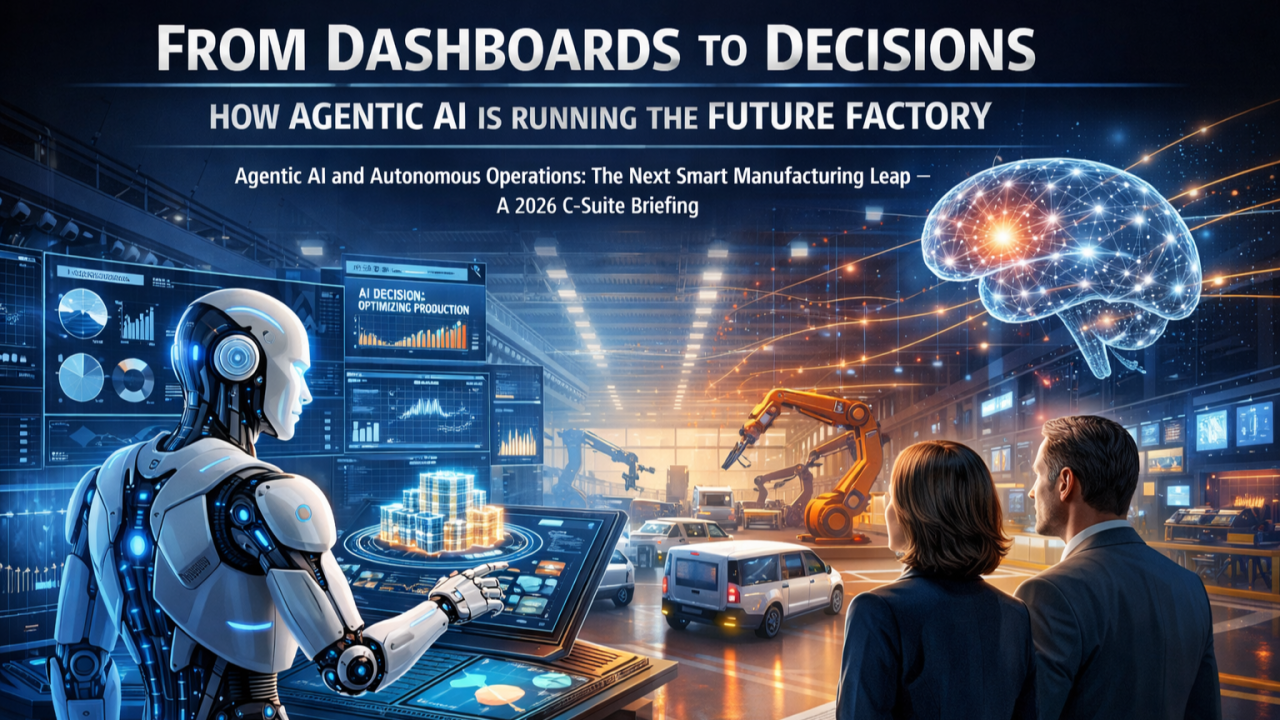
The Rise of the 'Silicon Workforce': How Agentic AI is Reshaping the Indian Stock Market
Agentic AI is moving beyond basic chatbots to create a new "Silicon Workforce." Discover how autonomous AI agents are disrupting the Nifty IT index, revolutionizing the Indian banking sector, and what it means for your stock portfolio.
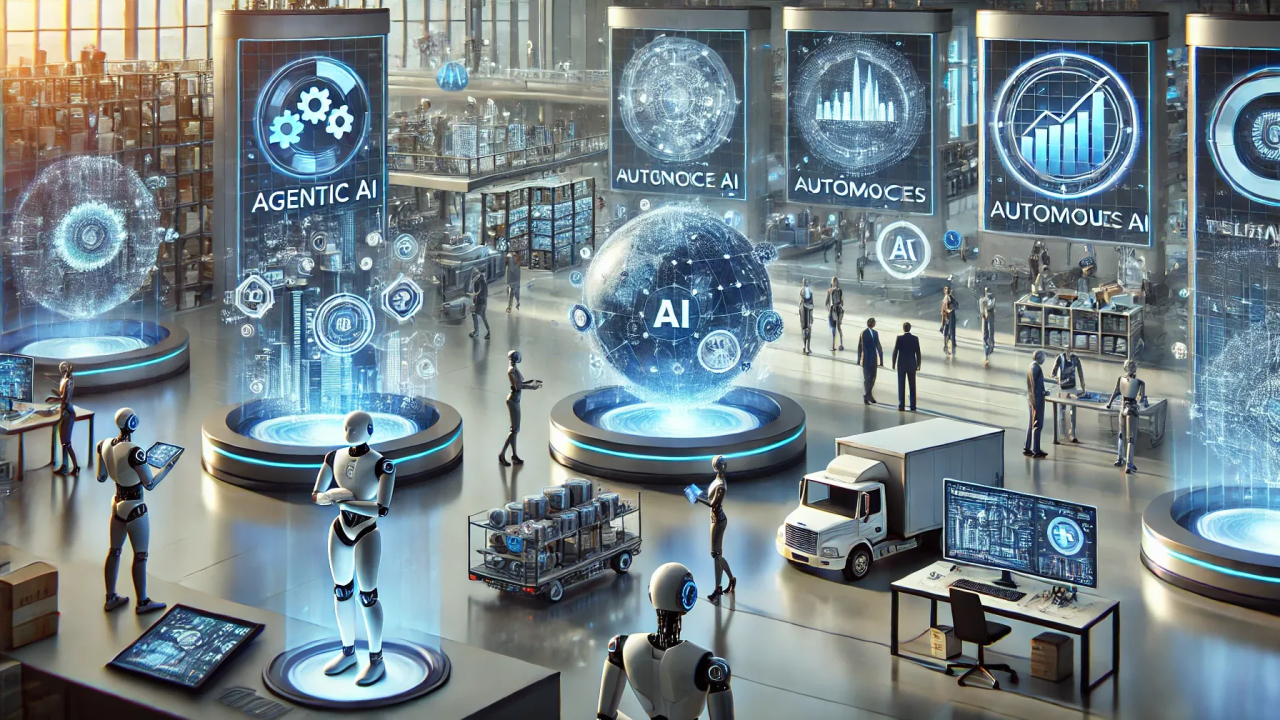
The Rise of the 'Silicon Workforce': How Agentic AI is Reshaping the Indian Stock Market
For the past few years, Dalal Street has been obsessed with Generative AI—chatbots that can write code, draft emails, and create images. But a massive paradigm shift is currently shaking the Indian stock market: the arrival of Agentic AI.Unlike passive AI that waits for human prompts, Agentic AI consists of autonomous systems—often called the "Silicon Workforce"—capable of making independent decisions, executing multi-step workflows, and achieving complex corporate goals entirely on their own. This technological leap is fundamentally altering the valuation models of India's biggest sectors.
Understanding the Shift: From Chatbots to Agents
To understand why markets are reacting so violently, we must look at the evolution of artificial intelligence in the workplace. We are currently witnessing a transition from "Copilots" to "Agents."
Generative AI (The Copilot): Assists a human worker (e.g., suggesting code or drafting an email). The human is still the primary bottleneck.
Agentic AI (The Agent): The agent receives a high-level goal (e.g., "Optimize our logistics costs by 12%"), formulates a plan, interacts with other software, and corrects its own errors. The AI is the worker.
Workforce" Impact on Indian SaaS
India is a global hub for SaaS (Software as a Service). The Silicon Workforce is flipping the SaaS pricing model on its head. Historically, companies charged "per seat" (per human user).
The Disruption: If an AI agent can do the work of 10 humans, "per seat" pricing collapses.
The Pivot: Indian SaaS players like Freshworks or Zoho are moving toward "Outcome-Based Pricing." You don't pay for the software; you pay for the task completed by the AI agent. This is a massive shift that investors must track to identify future multi-baggers.
The "AI Wealth Gap": Corporate Winners vs. Losers
The Silicon Workforce is creating a sharp divide in the Indian market. We are seeing a "Winner-Takes-All" dynamic where companies that own the data and the compute power are rapidly cannibalizing the market share of smaller, tech-laggard competitors.
The Aggregators: Large conglomerates like Reliance Industries are building "AI Sovereignty" by combining massive consumer data with world-class GPU clusters.
The Fragmented Losers: Small-to-midsize service firms that rely on manual data entry or basic "body shopping" are facing an existential crisis. If an AI agent can do 100% of their core service, their "Moat" has effectively evaporated.
Structural Shifts in the Nifty 50
As the Silicon Workforce drives profitability, we expect a major reshuffling of the Nifty 50 weights by 2027.
IT Weightage Pivot: Expect the Nifty IT index to move away from "Services" and closer to "Platforms."
Energy & Infrastructure: AI requires massive electricity. We are seeing a surge in demand for green energy stocks like Adani Green and Tata Power, as data centers for the Silicon Workforce require 24/7 carbon-neutral power.
Investor Checklist: Is Your Portfolio Ready for the Silicon Workforce?
Before making your next trade, run your top holdings through this "AI-Readiness Test":
[ ] Proprietary Data: Does the company own the data, or are they just renting someone else's AI model?
[ ] OPEX Reduction: Has the management explicitly mentioned "Autonomous Workflows" or "Agentic Integration" in their last two earnings calls?
[ ] Scalability: Can the company double its output without doubling its headcount? (The "Non-Linear Growth" test).
[ ] Regulatory Agility: Is the firm prepared for the upcoming India AI Act and DPDP compliance?
"The question isn't whether AI will replace humans in the workforce; the question for investors is whether AI-first companies will replace the legacy giants in your portfolio. The rotation has already begun."
Final Outlook: The 2026-2030 Supercycle
We are entering a multi-year supercycle where the Silicon Workforce will act as the primary driver of the Indian GDP. While the transition may be volatile, the long-term trajectory for "AI-Integrated" Indian equities is exceptionally bullish.
The Strategy: Stay overweight on "Enablers" (Energy, Data Centers) and "Early Adopters" (Top-tier BFSI), while maintaining a cautious stance on "Legacy Service" providers who are slow to automate.
The Math Behind the Margin Expansion: Human vs. Silicon
Why are investors so bullish on companies adopting Agentic AI? It comes down to basic unit economics. When Indian corporations replace repetitive cognitive labor with a Silicon Workforce, their Operational Expenditure (OPEX) drops dramatically.
Metric | Traditional Human Team | Silicon Workforce (Agentic AI) | Market Impact |
Availability | 8-9 hours / day | 24/7/365 | Faster project delivery. |
Error Rate | Moderate (Fatigue-based) | Near-Zero (Data-based) | Lower compliance penalties. |
Cost Scaling | Linear (More work = More hires) | Non-Linear (Fixed server costs) | Exponential EPS Growth. |
"We are witnessing a transition from 'software as a tool' to 'software as an employee.' The Silicon Workforce does not sleep, does not ask for appraisals, and scales infinitely." — Dalal Street Tech Analyst
Risks: The "Black Box" Problem
No technological revolution comes without friction. For traders, the biggest risk is the Black Box Effect. If thousands of autonomous agents in the BFSI sector decide to sell a specific stock simultaneously based on a misinterpreted data point, we could see "Flash Crashes" that bypass human circuit breakers.
The "AI-First" Investment Framework
How should you pick stocks in this new era? Look for these three pillars:
Data Sovereignty: Does the company own the unique Indian data required to train specialized agents? (e.g., Reliance Industries or HDFC Bank).
Compute Access: Does the company have the infrastructure or partnerships to run these agents at scale?
Low Legacy Debt: Is the company bogged down by massive, un-trainable human workforces, or can they pivot quickly?
Conclusion: Trading the Transition
The arrival of the Silicon Workforce is a deflationary force for corporate expenses and an inflationary force for corporate profits. As a retail investor, you must look beyond traditional P/E ratios. Start asking: "Is this company a user of AI, or is it being replaced by it?" The biggest gains in the next decade won't come from companies that "use" AI, but from those that successfully hire the Silicon Workforce to dominate their industry.
💡 Key Takeaway: The Margin Expansion Play
As Indian companies integrate Agentic AI into their operations, their employee benefit expenses will structurally decline. For long-term investors, this signals a massive potential for margin expansion and higher Earnings Per Share over the next 3-5 years.
The AI revolution moves fast, and so should your capital. Leverage SEBI's T+0 same-day settlement to rebalance your portfolio into high-growth tech stocks instantly.