
Gold at ₹1.43 Lakh: Is the Yellow Metal the Only Safe Bet in the 2026 War Crisis?
As the Sensex bleeds 1,300 points, gold has hit a staggering ₹1,43,829 per 10g. In a market gripped by war uncertainty and a crashing Rupee, we analyze if gold remains the ultimate safe haven or if it's entering a dangerous bubble.
The "De-Dollarization" Catalyst: Why Central Banks Are Hoarding Gold
The current price surge isn't just driven by retail panic; it is being orchestrated by the world's largest financial institutions. In the wake of ongoing geopolitical sanctions and trade wars, a massive "de-dollarization" trend has accelerated through 2025 and into 2026.
The wake-up call for global central banks was the 2022 freezing of approximately $280 billion in Russian foreign assets by Western powers. This unprecedented move highlighted the vulnerabilities of holding reserves in fiat currencies like the US Dollar or Euro. Consequently, central banks—led by China, Russia, Poland, and the Reserve Bank of India (RBI)—have been aggressively diversifying their foreign exchange reserves into physical bullion.
The Structural Price Floor: Central banks have been adding massive amounts of gold to their reserves—recording over 1,000 tonnes annually in recent years, an accumulation rate not seen since 1950. Because sovereign institutions buy based on long-term policy rather than short-term price movements, they create a permanent "floor" under the market, absorbing supply and refusing to sell during price corrections.
The RBI's Golden Vault: India's Strategic Shift
India is not just a passenger in this global trend; it is a primary driver. The Reserve Bank of India has made historic moves to secure the nation's economic sovereignty:
Massive Repatriation: In a major strategic shift, the RBI recently repatriated over 100 tonnes of its gold from the Bank of England's vaults back to domestic soil. This move signals a growing distrust of Western custodianship and a desire to keep sovereign wealth physically secure within India's borders.
Record Accumulation: As of early 2026, the RBI's total gold reserves have surged past 880 tonnes.
Forex Diversification: Gold's share in India's total foreign exchange reserves has nearly doubled over the past decade, currently hovering near 14–15%, as the RBI actively reduces its reliance on US Treasury bonds.
"If gold is not in your physical possession, it is not truly yours. The RBI's repatriation is a clear signal that in a fractured world, physical control is paramount."
Gold vs. Equities: The 2026 Divergence
For the last few years, investors enjoyed a rare period where both equities and gold rallied together. However, recent market meltdowns signal a return to traditional, inverse market dynamics:
Equities (Sensex/Nifty): Currently suffering from margin compression due to elevated crude oil prices, sticky inflation, and high borrowing costs. In recent quarters, a significant portion of Nifty 50 companies have reported weaker-than-expected earnings due to these macroeconomic headwinds.
Gold: Acting as the ultimate "zero-counterparty risk" asset. Unlike a stock, gold doesn't rely on a company's earnings, a CEO's decisions, or a government's promise to hold its value.
Technical Outlook: Where Does Gold Go From Here?
From a technical charting perspective, MCX Gold has broken out of a multi-month consolidation channel, supported by bullish long-term forecasts from global institutions predicting international prices could test the $3,000/oz mark.
Immediate Resistance: ₹1,48,000 per 10g. If geopolitical flashpoints (such as Middle Eastern tensions or new trade tariffs) deteriorate further, panic buying could easily push prices to this level.
Major Support: ₹1,38,500 per 10g. Any diplomatic resolution, sudden drop in crude oil prices, or temporary halt in central bank buying could trigger a short-term pullback to this zone, presenting a "buy-on-dip" opportunity.
How Indian Investors Should Play the Gold Rush
If you are looking to increase your allocation to the yellow metal, avoid blindly buying physical jewelry due to high making charges (which can eat up 10–15% of your capital). Here is a comprehensive look at the best ways to gain exposure:
Investment Route | Liquidity | Tax Efficiency | Best For |
Sovereign Gold Bonds (SGBs) | Low (Lock-in applies) | Excellent (Tax-free on maturity + 2.5% interest) | Long-term wealth creation & passive income. |
Gold ETFs | High (Trade like stocks) | Moderate (Taxed as capital gains) | Active traders & short-term portfolio hedging. |
Gold Mutual Funds | High (Redeem anytime) | Moderate (Taxed as capital gains) | SIP investors who don't have Demat accounts. |
Digital Gold | Very High (Instant sell) | Low (3% GST on purchase) | Small, systematic micro-investing. |
Physical Coins/Bars | High | Low (GST + storage risks) | Those wanting physical possession off-grid. |
The Verdict: Bubble or Bull Run?
While current prices seem expensive historically, viewing them in isolation is a mistake. When measured against the staggering expansion of global debt (with US public debt exceeding 120% of GDP) and the rapid devaluation of fiat currencies, gold is merely adjusting to maintain its purchasing power. It is not necessarily a bubble, but rather a reflection of a deeply fractured global economy where trust in traditional currencies is eroding.
Investor Alert: The Gold-to-Silver Ratio
While gold is grabbing headlines at ₹1.43 Lakh, silver is currently undervalued by historical standards. Investors looking for higher beta returns in the "Safe Haven" category should watch the silver breakout closely as we head into April.
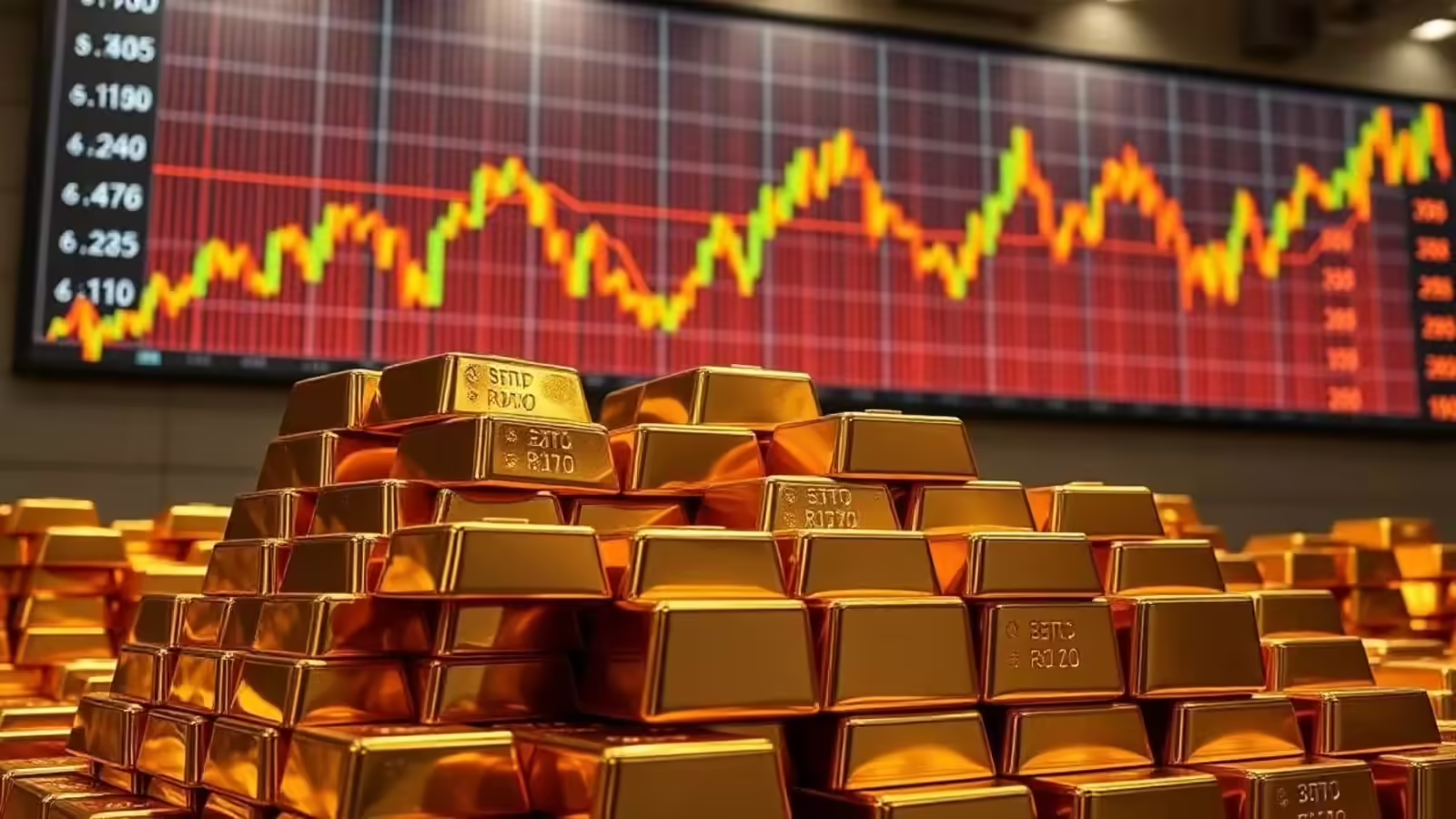
A visual representation of gold's historic price surge, driven by massive institutional hoarding, de-dollarization, and shifting global economic dynamics.