The "Peace Rally" Playbook: Which Sectors Win if Crude Oil Keeps Falling?
A one-day drop in Brent Crude creates a gap-up; a sustained multi-month collapse creates a "Peace Rally." When geopolitical tensions fade and oil stays below $70 a barrel, a massive wealth transfer occurs on Dalal Street. Discover the Tier-1 and Tier-2 sectoral beneficiaries, from Aviation to FMCG, and learn how to position your portfolio for long-term margin expansion.
The Macro Setup: What is a Peace Rally?
In our previous guide, we discussed how to trade the immediate 9:15 AM gap-up caused by a sudden geopolitical ceasefire. But what happens if peace actually holds?
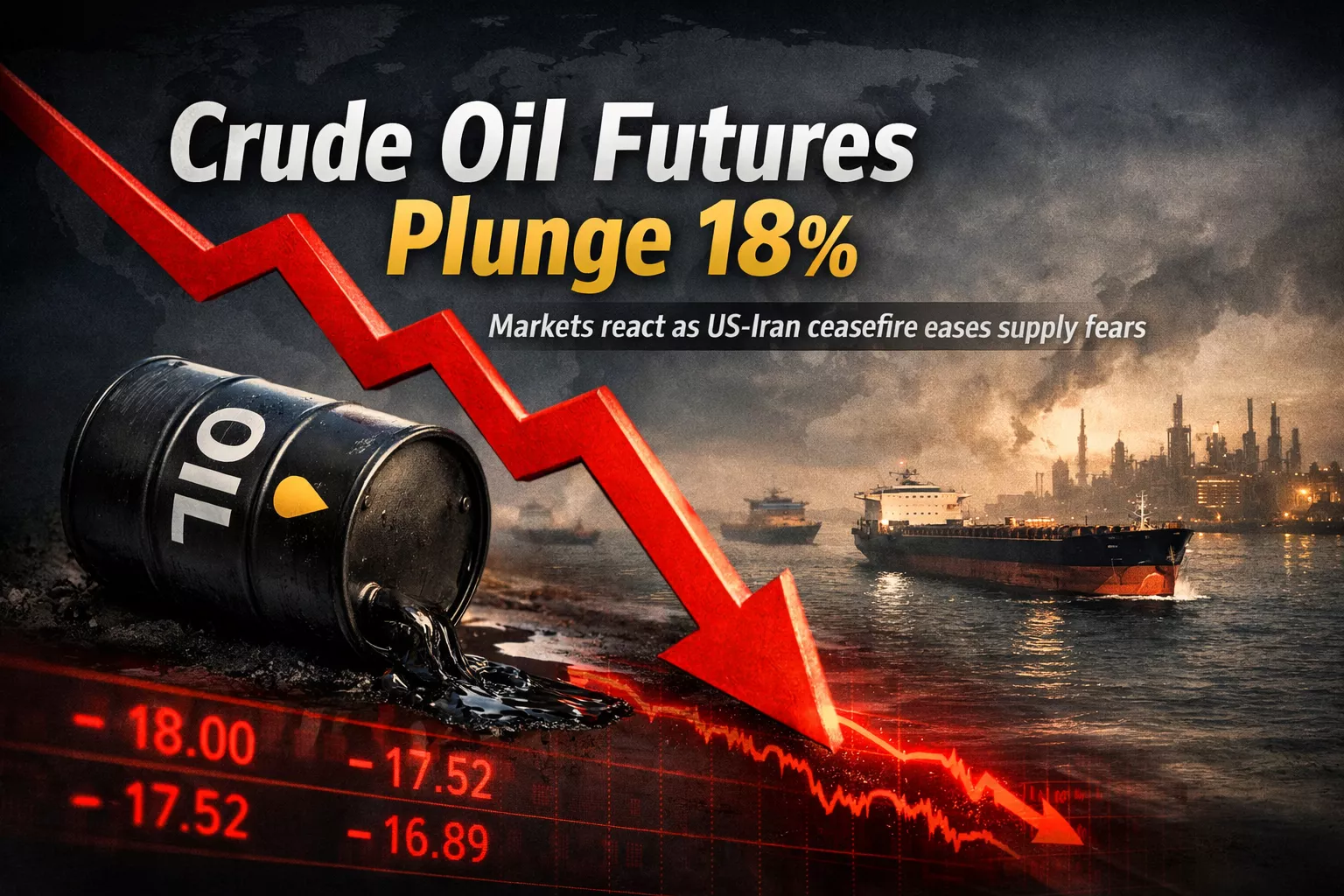
When the geopolitical risk premium is permanently stripped away from Brent Crude, oil does not just drop—it stays down. It enters a structural bear market, hovering below the $70 mark. For a country like India, which imports over 85% of its crude requirements, this triggers a Peace Rally.
A Peace Rally is a sustained, multi-month bull run driven not by speculation, but by the mathematical certainty of corporate margin expansion. When crude stays cheap, input costs plummet, inflation cools, the RBI slashes rates, and institutional capital rotates aggressively into the beneficiaries.
Here is your institutional playbook for allocating capital during a structural oil bear market.
The Screening Trap
In Part 1, we established that a sustained drop in Brent Crude triggers a massive Peace Rally, disproportionately benefiting Tier-1 sectors like Paints, Tyres, and Aviation.
Retail traders read this and immediately buy the cheapest, lowest-quality stock in the Paint sector, assuming a rising tide lifts all boats. This is a fatal flaw. When raw material costs crash, poorly managed companies often slash their retail prices to gain market share, completely destroying the margin expansion they were supposed to enjoy.
To generate true alpha during a Peace Rally, you must screen your stocks using institutional metrics.
Strategy 1: The Pricing Power Matrix
When screening for Tier-1 beneficiaries, you must look at a company's historical behavior during previous oil crashes (e.g., 2014, 2020).
The Ideal Compounder: Look at market leaders like Asian Paints or Pidilite. Because they command massive brand loyalty and monopolistic distribution networks, they do not lower the price of a bucket of paint or a tube of adhesive just because crude oil fell. They keep the retail price identical, pocket the raw material savings, and report explosive 25%+ EBITDA margin expansion.
The Value Trap: Now look at second-tier or unorganized players. To compete with the giants, they are forced to pass the crude oil savings directly to the consumer via price cuts. Their revenue might increase slightly, but their margins stay completely flat.
Execution Rule: Only buy companies in the top two positions of market share within their sector. They dictate the pricing.
Strategy 2: The RBI Rate-Cut Multiplier
A true Peace Rally is a two-stage rocket.
Stage 1 is the direct margin expansion from cheaper crude.
Stage 2 is the macroeconomic multiplier.
When crude oil stays below $70 for three months, Indian CPI (Retail Inflation) drastically cools down. This forces the Reserve Bank of India (RBI) to pivot from a hawkish stance to a dovish stance and cut interest rates.
The Execution: You want to buy stocks that benefit from both cheaper oil and cheaper interest rates. Auto manufacturers (like Maruti Suzuki or Tata Motors) are the perfect hybrid play. Cheaper petrol increases consumer demand for vehicles, while an RBI rate cut makes auto loans cheaper. It is a fundamental double-engine surge.
Strategy 3: Spotting the "Demand Destruction" Fake-out
Not every oil crash is a Peace Rally. You must differentiate between an oil crash caused by a Geopolitical Ceasefire (Bullish) and an oil crash caused by Global Demand Destruction (Highly Bearish).
The Warning Sign: If crude oil is crashing because the US and Chinese economies are entering a brutal recession and manufacturing is grinding to a halt, this is not a Peace Rally. In this scenario, Indian exports will collapse, IT sector revenues will dry up, and the broader Nifty 50 will tank regardless of how cheap oil gets.
The Verification: Always cross-reference the oil crash with global metal prices (Copper, Aluminum). If oil is crashing but Copper (Dr. Copper) is holding steady or rising, the global economy is healthy. The Peace Rally is legitimate. If both Oil and Copper are falling off a cliff, liquidate your portfolio and move to cash.
Tier-1 Beneficiaries: The Direct Input Winners
These are the sectors that experience an immediate and direct reduction in their raw material costs. They are the most sensitive to crude prices and offer the highest beta during a Peace Rally.
1. Paints & Adhesives (The Chemical Compounders)
The Mechanics: Companies like Asian Paints, Berger Paints, and Pidilite rely heavily on crude oil derivatives like Titanium Dioxide (TiO2) and various monomers. These chemicals account for nearly 40% to 50% of their raw material costs.
The Peace Rally Impact: When crude stays low for a quarter, their Gross Margins explode. Because these companies possess massive pricing power (they rarely lower paint prices for consumers even when crude falls), every rupee saved on raw materials flows directly to the bottom line (Net Profit).
2. Aviation (The ATF Relief)
The Mechanics: Aviation Turbine Fuel (ATF) makes up roughly 40% of an airline's operating expenses.
The Peace Rally Impact: Airlines like IndiGo operate on notoriously razor-thin margins. A sustained 15% drop in ATF costs transitions them from surviving to generating massive free cash flow. This is a high-risk, high-reward turnaround play.
3. Tyres (The Synthetic Rubber Play)
The Mechanics: Tyre manufacturers (MRF, Apollo, CEAT) use synthetic rubber and carbon black—both of which are direct downstream products of crude oil.
The Peace Rally Impact: Similar to paints, tyre companies enjoy strong replacement-market demand. When synthetic rubber costs crash, their EBITDA margins widen significantly, prompting institutional analysts to aggressively upgrade their price targets.
Tier-2 Beneficiaries: The Ripple Effect
These sectors don't just consume crude directly; they benefit from the secondary effects of cheaper fuel, such as lower logistics costs and higher consumer spending.
1. Fast-Moving Consumer Goods (FMCG)
The Mechanics: FMCG giants (HUL, ITC, Britannia) spend massive amounts on plastic packaging (a crude derivative) and freight/logistics to transport goods across India.
The Peace Rally Impact: Cheaper diesel lowers freight costs. Cheaper plastic lowers packaging costs. More importantly, when inflation drops due to cheap oil, rural Indian consumers have more disposable income to spend on branded FMCG products, driving volume growth.
2. Oil Marketing Companies (OMCs)
The Mechanics: This is highly counter-intuitive for retail traders. While upstream oil producers (ONGC) lose money when crude falls, downstream Oil Marketing Companies (HPCL, BPCL, IOCL) often make a killing.
The Peace Rally Impact: OMCs buy crude, refine it, and sell it at the pump. When crude prices fall rapidly, retail petrol/diesel prices are rarely slashed at the same speed by the government. This massively inflates their "Marketing Margins," leading to blockbuster quarterly earnings.
Conclusion: Accumulate the Compounders
A Peace Rally is not the time for intraday scalping; it is the time for structural swing trading. Once Brent Crude decisively breaks down below major technical support levels, initiate positional Longs in Paints, Aviation, and FMCG. Ride the margin expansion wave until the next quarterly earnings, and let the institutional rerating do the heavy lifting for your portfolio.
💡 The Aviation Warning:
Airlines lease planes in US Dollars. If the Rupee depreciates, those expensive dollar leases will completely wipe out their cheap oil savings. Always watch USD/INR.
The ultimate Peace Rally winner is a company that enjoys the collapse in crude oil input costs but refuses to lower the final price of its product for the consumer. This is called Pricing Power, and it is the holy grail of fundamental investing.