The Market Is Closed Today — Here's the 1-Hour Mid-Year Review That Saves My Second Half Every Year
Markets are closed for the July 4th holiday — and that makes today the most valuable trading day of the year. The first half of 2026 just delivered the best quarter since 2020. Before you carry your habits into H2, here's the exact one-hour review I run every mid-year, including the three questions that hurt to answer.
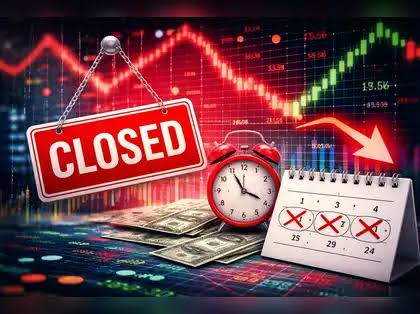
The Best Trading Day of the Year Has No Trading
The market is closed today for the July 4th weekend. No ticks, no candles, no headlines to react to. Most traders treat days like this as dead time.
I used to. Now I think the opposite: a closed market at the exact halfway point of the year is the single best trading opportunity on the calendar — because the biggest edge available to a retail trader isn't a better indicator. It's an honest look at their own behavior, taken when there's no open position whispering excuses.
And what a half to review. The S&P 500 just wrapped its best quarter since 2020, up nearly 15%. The Nasdaq gained over 21% for the quarter. Chips ran more than 80% in six months, then spent this week getting sold two days straight. Records everywhere, rotation underneath. Whatever you did in that environment — good or bad — the evidence is sitting in your account history.
So grab a coffee. Here's the review I run every July, in the order I run it. One hour. Bring honesty.
Step 1: Pull the Numbers Nobody Wants to Pull (15 minutes)
Open your broker statement — the actual statement, not your memory, because memory is a liar with a bullish bias. Write down:
Your total P&L for the half. Your win rate. Your average winner versus your average loser. Your three biggest wins and three biggest losses. How many trades you took in total.
Now the uncomfortable comparison: the S&P returned about 9.6% in the first half; the Nasdaq about 12%. If you traded actively all half, took on all that stress, and made less than a boring index fund — that's not a shameful result, it's the single most useful data point you'll get all year. It doesn't necessarily mean quit. It means your current process, in one of the friendliest markets since 2020, didn't beat the default. H2 needs a change, not more of the same.
Step 2: The Three Questions That Hurt (20 minutes)
Question one: did I make money because of my process or because of the market? In a half where nearly everything went up, a green account proves very little. Look at your winners — were they your planned setups working, or just "bought something in an uptrend"? The tide was in. The tide will not always be in.
Question two: what did my three biggest losses have in common? Mine, historically, always share a root: oversized positions in trades I hadn't planned. Yours might be revenge trades after a loss, or holding through events (this week's Shutterstock holders can tell you about that one). The pattern is the diagnosis. Three big losses almost never have three different causes.
Question three: which trades did I take that I'd forbid a friend from taking? This one stings the most and pays the most. We all have rules we preach and ignore. Reading your own trade log like it belongs to a friend you're coaching exposes the gap between the trader you describe and the trader you are.
Step 3: Audit the Environment You're Walking Into (15 minutes)
A review isn't just backward-looking. The second half of 2026 opens with a very specific setup, and your plan should acknowledge it:
The market enters H2 at record highs after a historic run — which means expectations are stretched. The hottest trade of the half, semiconductors, just showed its first cracks with two straight days of heavy selling while money rotated into financials, industrials and healthcare. Rate-cut hopes are alive after a weak June jobs report sent the Dow to a record. And Q2 earnings season starts in about two weeks, landing directly on top of those stretched expectations.
None of that tells you what happens next — anyone who claims to know is selling something. But it tells you what to prepare for: more rotation, bigger reactions to earnings, and a market where last half's autopilot (buy the hottest thing, hold, repeat) carries more risk than it did in March.
Step 4: Write the H2 Plan on One Page (10 minutes)
Not a manifesto. One page, four lines:
The one mistake I will not repeat. Singular. Pick the most expensive pattern from Step 2 and write the specific rule that blocks it. Mine one year was literally: "No position over X% of the account, no exceptions, including the ones that feel like exceptions."
My maximum position size and daily loss limit, in actual numbers. Percentages you compute in your head get negotiated in the moment. Written currency amounts don't.
The setups I'm allowed to trade. If it's not on the list, it's not a trade, no matter how good the story is.
One skill to build this half. Reading rotation. Journaling every trade. Sitting out event days. One skill, six months. Compounding applies to abilities too.
Then put the page somewhere you'll see it — I keep mine taped next to the monitor, slightly embarrassing on video calls, worth every awkward glance.
Step 5: Actually Take the Day Off
Last step, and I mean it: close the laptop. Burnout is a real trading cost — it shows up as sloppy entries, skipped journals, and revenge trades, usually right when the market gets interesting. The traders who survive decades aren't the ones glued to screens 365 days a year. They're the ones who treat rest as risk management.
The market reopens Monday. It will be there, confusing as ever. Go eat something off a grill.
Bottom Line
The first half of 2026 handed out one of the friendliest markets in years, and the second half opens with records, rotation, and earnings season inbound. The traders who thrive from here won't be the ones with the best predictions — they'll be the ones who spent one quiet holiday hour learning from their own evidence while everyone else scrolled.
One hour. Five steps. Your broker statement is braver than your memory. Go find out what it says.
Not financial advice — just one trader's holiday homework. Do your own research, and your own review. Happy 4th.
FAQ
Q1: Is the stock market open on July 3, 2026?
No. Because July 4 falls on a Saturday in 2026, U.S. markets observed the Independence Day holiday on Friday, July 3. The last trading session of the week was Thursday, July 2, and markets reopen Monday, July 6.
Q2: What should a mid-year trading review include?
Five things: your real P&L and trade statistics from broker statements, a comparison against a benchmark index, an analysis of what your biggest losses had in common, a look at current market conditions, and a short written plan with position-size and loss limits for the second half.
Q3: How did the stock market perform in the first half of 2026?
Very strongly. The S&P 500 gained about 9.6% and the Nasdaq about 12% in the first six months, with the second quarter being the best for both indexes since 2020. The Dow posted its best quarterly gain since 2022 and entered July at record levels.
Q4: Why compare my trading results to an index fund?
Because the index is your opportunity cost. If active trading — with all its time, stress, and risk — earns less than simply holding an index fund over the same period, that signals your current process needs changing. In a strong market half, it's the most honest benchmark available.
Q5: How often should traders review their performance?
A deep review twice a year (mid-year and year-end) works well for most, supported by a brief weekly or monthly journal check. Reviewing too rarely lets bad habits compound; reviewing daily results too obsessively creates noise and emotional decision-making.
Q6: What's the most common mistake found in trading reviews?
Position sizing. Most traders discover their few biggest losses — usually oversized, unplanned trades — wiped out a large share of many small disciplined wins. Fixing size and planning typically improves results more than finding new strategies.
Q7: What should traders watch in the second half of 2026?
Three things stand out: whether the semiconductor selloff that started in early July deepens into a broader rotation, the Q2 earnings season beginning mid-July against stretched expectations, and Federal Reserve rate-cut signals after June's weaker jobs report.
Your Broker Statement Is Braver Than Your Memory
Markets are closed for July 4th — the perfect time for a mid-year review. Pull your real H1 numbers, compare them to the index, find the shared cause behind your worst losses, and write a one-page H2 plan. One honest hour beats a year of autopilot.
With the S&P 500 up 9.6% and the Nasdaq up 12% at the half, the July 4th break is the natural checkpoint to review what actually worked — before earnings season tests everyone in two weeks.