
Why the Indian Stock Market Crashed Today: Sensex & Nifty Fall Explained
Following a massive single-day rally, Indian benchmark indices reversed course sharply on April 9, 2026. Fading optimism around a US-Iran ceasefire, climbing Brent crude prices, and sustained FII outflows have triggered heavy profit-booking across major sectors.
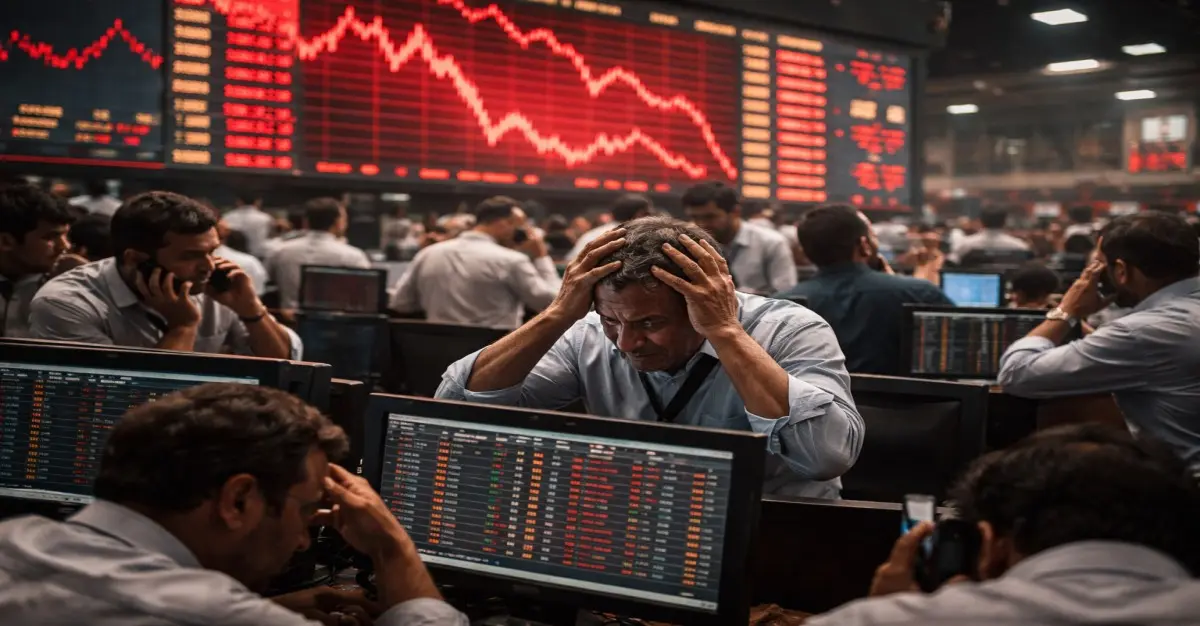
Market Volatility Returns to Dalal Street
Following a spectacular 873-point rally just a day prior, the Indian stock market faced a severe reality check on April 9, 2026. The benchmark Nifty 50 slipped below the crucial 23,800 mark, while the BSE Sensex tumbled over 900 points.
For retail investors and day traders, this sudden volatility is a stark reminder of how vulnerable domestic markets are to global macroeconomic cues. But what exactly triggered this massive sell-off? Let's dive into the core reasons behind today's stock market crash.
Top 4 Reasons Behind the Stock Market Fall Today
Search engines and investors alike are looking for the "why." Here is a breakdown of the primary catalysts dragging the benchmark indices down:
Fading Geopolitical Optimism: The initial market euphoria surrounding a potential US-Iran ceasefire has evaporated. With the Strait of Hormuz remaining a chokepoint and renewed tensions bubbling, markets are quickly pricing in the reality that the two-week truce might not hold.
Surging Brent Crude Oil Prices: India imports roughly 85% of its crude oil. As geopolitical doubts grew today, Brent crude futures spiked past the $96 per barrel mark. High oil prices historically inflate India's current account deficit, push up domestic inflation, and pressure corporate margins.
Relentless FII Selling: Foreign Institutional Investors (FIIs) have been offloading Indian equities for 26 consecutive sessions. As global bond yields fluctuate, FIIs are de-risking their portfolios and pulling capital out of emerging markets.
Inflation and Rate Cut Delays: With commodity prices rising, hopes for an imminent interest rate cut by the Reserve Bank of India (RBI) or the US Federal Reserve have dimmed. Higher interest rates for a longer period generally pull liquidity out of the equity markets.
"After a sharp rally in the previous session, today's decline is a classic case of profit-booking. Institutional investors are choosing to lock in gains rather than carry fresh risk into a volatile weekend."
Bank Nifty Drag: Financials Take a Hit
The Nifty Bank index was one of the biggest underperformers in today's trading session. Financial stocks carry a heavy weight in both the Sensex and Nifty 50. When heavyweights like HDFC Bank, ICICI Bank, and SBI face selling pressure due to margin concerns and foreign fund outflows, the broader market inevitably feels the drag.
Sector Analysis: The Winners and Losers
The selling pressure was not evenly distributed across the board.
Top Losers (The Drag): Alongside private banks, the IT and aviation sectors bore the brunt of the downturn. InterGlobe Aviation (IndiGo) and L&T saw heavy selling volumes as investors booked profits.
Top Gainers (The Silver Lining): The broader market showed resilience. The Nifty Midcap 100 and Smallcap 100 indices outperformed the large caps. Furthermore, the metal and power sectors attracted strong buying momentum, with Tata Steel and NTPC managing to end in the green.
Key Technical Levels to Watch
For traders looking at the charts, the Nifty has broken key short-term support levels.
Nifty Support: Immediate support is now placed at the 23,650 level. If the index breaks below this, we could see a further slide toward 23,500.
Nifty Resistance: On the upside, 24,000 will now act as a stiff psychological and technical resistance.
Frequently Asked Questions (FAQs)
Why is the Indian stock market falling today? The market is falling primarily due to negative global cues, including fading hopes for a US-Iran ceasefire, rising Brent crude oil prices, and continuous selling by Foreign Institutional Investors (FIIs).
Will the stock market crash further? Market movements depend heavily on upcoming Q4 corporate earnings and global geopolitical developments. While short-term volatility is expected, India's long-term macroeconomic fundamentals remain strong.
Is this a good time to buy stocks? A market correction often presents a buying opportunity for long-term investors. Staggering your investments (SIPs) into fundamentally strong, large-cap stocks during dips is a standard strategy to navigate volatility.
What Should Retail Investors Do Next?
During periods of high volatility, panic selling is rarely the right strategy. Keep a close watch on the upcoming Q4 FY26 earnings reports, starting with IT bellwethers like TCS later this week. Strong corporate earnings could easily reverse today's bearish sentiment and set a positive tone for the upcoming quarter.
💡 Key Takeaway: Understanding Same-Day Settlement
The transition to SEBI's T+0 settlement cycle eliminates the traditional 24-hour waiting period for trades to finalize. In a volatile market like today's, this means immediate capital availability upon selling, allowing you to instantly buy the dip.
Don't let market dips trap your capital. Learn how SEBI's new same-day settlement helps you trade faster.