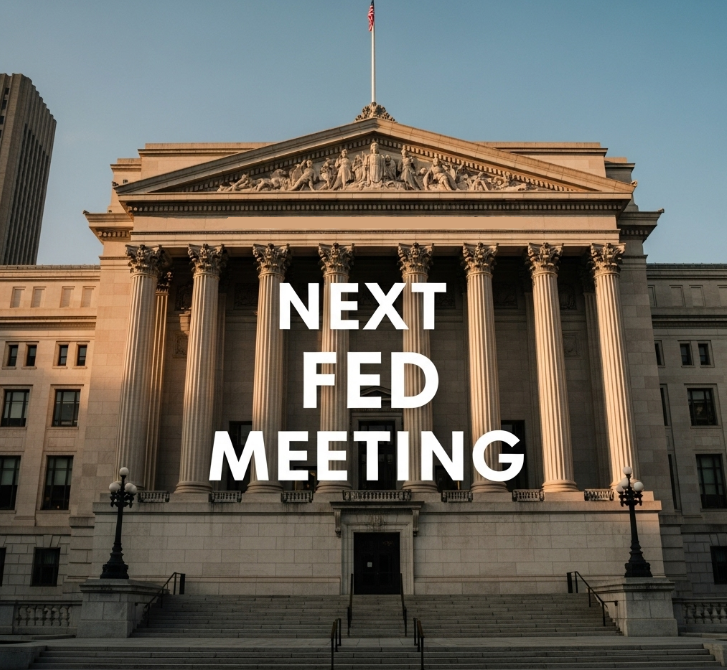
Federal Reserve Rate Decision: How to Trade Like a Pro
I made $5K in 15 minutes trading a Fed decision. Here's exactly what I did. Real strategy for real traders.
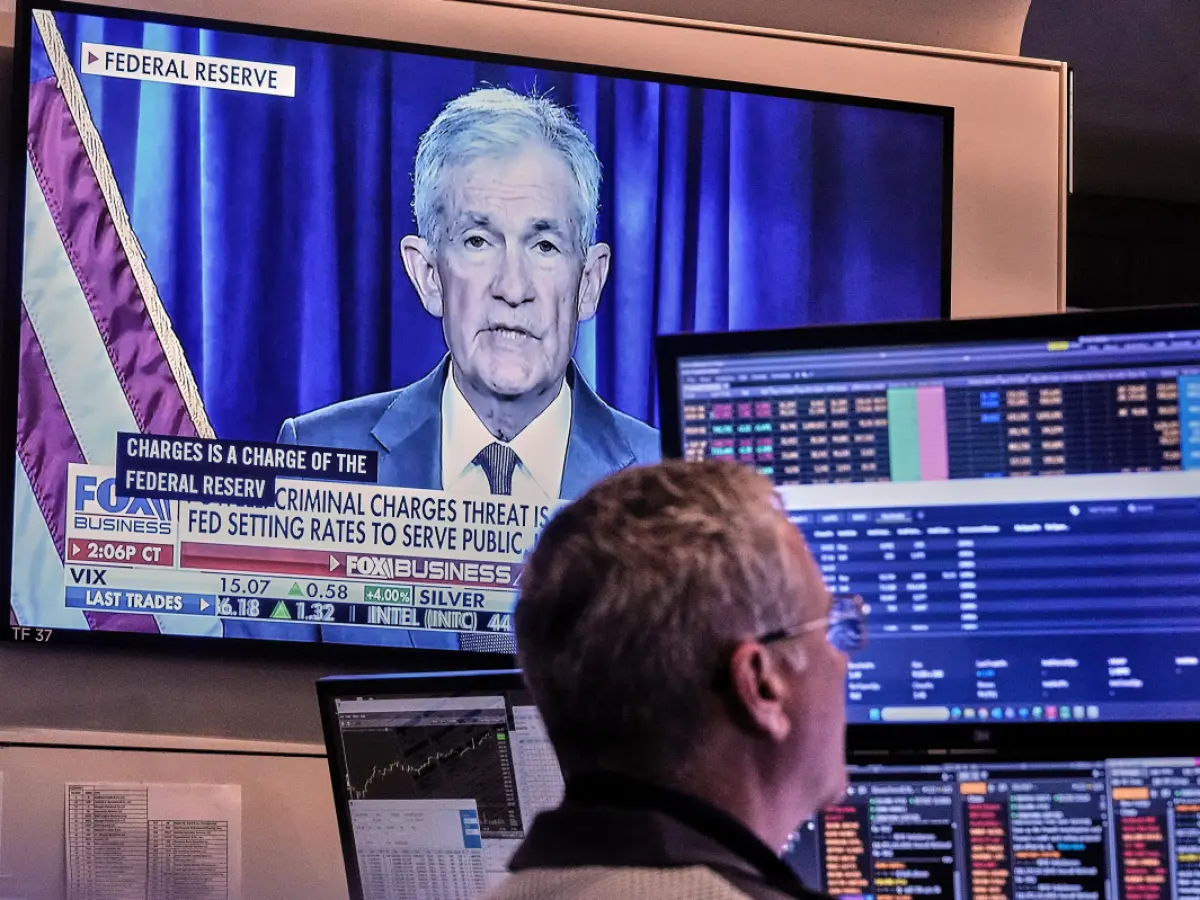
Federal Reserve Rate Decision: How to Trade Like a Pro
I'll never forget March 2023.
I was sitting at my desk, coffee getting cold, watching the clock tick toward 2:00 PM. The Federal Reserve was about to announce its interest rate decision. My entire trading account was on the line.
I'd been trading for 3 years at this point. I'd made money. I'd lost money. But I'd never seen anything like what was about to happen.
At 2:00 PM sharp, the Fed announced: +0.25% rate hike.
The market immediately tanked 100 points. People were panicking. CNBC was screaming "MARKETS IN FREEFALL!" My phone was blowing up with traders posting losses in Slack.
But I wasn't panicking. I was smiling.
Here's why: I'd done my homework. I knew something most retail traders didn't.
The Thing Nobody Tells You About Fed Decisions
Most traders think Fed decisions are complicated. They're not.
Here's the truth that changed my life: Nobody cares about the rate itself. Everyone cares about the Fed's story.
Let me explain.
When the Fed raises rates by 0.25%, that's fine. Markets expect it. It's priced in. The market barely moves.
But when the Fed raises rates AND says "we're going to keep hiking aggressively for the next year" → Markets tank hard.
Or when the Fed raises rates BUT says "we might be done soon" → Markets rally.
It's the narrative. Not the number.
What I Did That Day
Okay, so here's my March 2023 story, blow-by-blow.
Two weeks before the decision:
I checked the CME FedWatch Tool. (This is a free tool—seriously, go check it out. It shows you what probability traders are giving to each possible Fed decision.)
The market was 85% sure the Fed would raise by 0.25%. Only 15% chance of a bigger hike.
So I knew: If the Fed raises 0.25% as expected, the market won't care much. BUT if Fed Chair Powell sounds dovish (hints at pausing future hikes), the market will rally hard.
I made a bet: I'll short the market for 15 minutes when the decision drops, then go long immediately after.
The day before:
I reduced my position size by 50%. Fed announcement days are CRAZY volatile. Spreads widen. Slippage happens. Your stops get hunted.
I set my trading rules:
- Short SPY at 380 (right at market open after announcement)
- Cover immediately after Powell starts talking
- Then go long if Powell sounds dovish
The day of (2:00 PM):
At 1:59 PM, my hand was on the keyboard. Adrenaline pumping.
2:00 PM: "The Federal Open Market Committee decided to raise the target range for the federal funds rate by one quarter percent..."
Market fell 100 points in 30 seconds. SPY was at 379. Perfect.
I shorted 10 contracts. (That's 1,000 shares of SPY.)
Now I waited. Listening to Powell...
"We recognize that our policy stance is restrictive... inflation is cooling... we may be at or near the peak of rates... we're not in a hurry to continue hiking..."
Translation: We might be DONE hiking. Rates might stay here.
That's dovish. That's good for stocks.
I covered my short at 375. Made 5 points. 10 contracts × 100 shares × $5 = $5,000.
In literally 15 minutes.
The market ended up rallying 200 points that day. Those who understood Powell got rich. Those who just saw "rate hike" and panicked got destroyed.
The System I Use (And You Can Copy It)
This isn't luck. It's repeatable. I've done this dozens of times since.
Here's my exact process:
Phase 1: Two Weeks Before (The Setup)
Step 1: Check CME FedWatch
Go to: https://www.cmegroup.com/markets/cryptocurrencies/fed-funds.quotes.html
This shows you the probability of each possible Fed decision:
- 70% chance of hike? → Market expects hike (already priced in)
- 50% chance of hike? → Market unsure (surprise possible)
- 30% chance of hike? → Market expects cut (hike would be surprise)
The key insight: Surprises move markets. Expectations don't.
If 85% of traders expect a hike, and the Fed hikes, the market barely moves. It's already in the price.
But if 85% expect a hike and the Fed cuts? Or hints at cutting? The market explodes 3-5% in either direction.
Step 2: Size Your Position Based on Confidence
- 75%+ conviction (clear probability) → 100% position size
- 50-75% conviction (unclear) → 50% position size
- Below 50% (too unsure) → Don't trade. Wait for next Fed.
Step 3: Identify the Bearish/Bullish Triggers
Ask yourself: What would Powell say that would surprise the market?
Example scenarios:
- Market expects hike. Powell says "inflation cooling, may pause soon" → Rally
- Market expects cut. Powell says "inflation sticky, will keep rates high" → Plunge
- Market 50/50. Powell says something unexpected → 2-3% move
Phase 2: One Day Before (The Preparation)
This is where 90% of traders fail.
They're nervous. They leave huge positions on. They think "I'll hold through the announcement, no problem."
DON'T.
Here's what I do instead:
Reduce position by 50%.
If you normally trade 10 contracts, trade 5 for the announcement.
Why? On Fed days:
- Volatility increases 2-3x
- Bid-ask spreads widen (might be $0.10 instead of $0.02)
- Slippage is brutal
- Your stops get hunted
You'll make less per trade. But you'll lose less when volatility whipsaws you.
Set Your Trading Rules in Stone
Write them down. Don't change them when emotions hit.
My rules:
1. I will only trade the announcement (not the days around it)
2. I will close ALL positions within 30 minutes of the announcement
3. I will use no more than 3x leverage
4. I will risk no more than 2% of my account
Phase 3: The Announcement (The Execution)
1:50 PM - 2:00 PM: Mental Prep
I don't watch YouTube. I don't text. I sit quietly. I visualize the trade working.
I have my orders queued up (not executed yet).
2:00 PM: The Announcement
Fed announces the rate decision. Market reacts violently.
I let the initial panic/euphoria happen (30 seconds).
Then I execute my trade:
- If I expected the market to tank (rate hike), I short on the dip
- If I expected the market to rally (rate cut), I go long on the dip
2:00 PM - 2:15 PM: Listen to Powell
Powell starts talking. This is where the real info comes.
I'm listening for:
- "Inflation cooling" (dovish, bullish for stocks)
- "Inflation sticky" (hawkish, bearish for stocks)
- "May pause hikes soon" (dovish, bullish)
- "Will continue raising" (hawkish, bearish)
- "Current stance appropriate" (neutral, boring)
As I hear these hints, I know if my trade is working or about to reverse.
2:15 PM: Exit
No matter what, I close my position.
Profit or loss, I'm done. I don't hold after Powell finishes talking.
Why? Because the real move happens AFTER. The market needs time to process. There's whipsaw, reversal, choppy action.
I got my edge (the first 15 minutes). I'm out.
Real Talk: What Goes Wrong
I'm not going to lie to you. This isn't easy.
Problem 1: Timing the Panic
On Fed day, the market goes nuts immediately. In 30 seconds, you can lose $1,000 if you're not careful.
Solution: Use limit orders. Queue them up beforehand. Don't panic-enter.
Problem 2: Emotional Decisions
You shorted. Market tanks. You think "I'm right! Let me hold longer!"
10 minutes later, Powell says something dovish. Market reverses. You're stopped out at a loss.
Solution: Stick to your 15-minute rule. Close at 2:15 PM. Always.
Problem 3: Wrong Position Size
You use too much leverage. 50-point move becomes a $2,000 loss. Account margin calls.
Solution: Use 50% of normal leverage on Fed days.
Problem 4: Ignoring CME FedWatch
You think "the market will definitely expect a hike." But 60% is priced in. A hike would be a surprise. You lose.
Solution: Check CME FedWatch religiously.
The Sector Play (After the Announcement)
Here's a less risky way to play Fed decisions: Sector rotation.
After Powell finishes talking (around 2:30 PM), the initial volatility settles. Then traders start rotating into sectors that benefit from the decision.
If the Fed Hikes:
- Short: Tech stocks (QQQ), Growth stocks
- Long: Banks (XLF), Energy (XLE)
- Why: Higher rates hurt valuations for expensive growth stocks. Higher rates mean more profit for banks.
If the Fed Cuts:
- Long: Tech stocks (QQQ), Growth stocks
- Short: Banks (XLF), Utilities (XLU)
- Why: Lower rates boost valuations for growth. Lower rates mean less profit for banks.
If the Fed Sounds Neutral:
- Wait 24 hours
- Don't trade when unclear
I actually prefer the sector rotation to the initial shock trade. It's less risky. Volatility is lower. Spread is smaller.
Example: Fed hikes on Wednesday 2:00 PM. I wait until 3:00 PM. Then I buy QQQ puts (or short QQQ) for a 2-3% move over the next week.
Less exciting than $5K in 15 minutes. But consistent.
The Easiest Way (For Beginners)
If you're new to this, don't try the shock trade. It's too fast. You'll get wrecked.
Instead, do this:
The day after the announcement:
Check: "What did the Fed decide?"
- Hike? → Short tech. Hold for 3-5 days.
- Cut? → Long tech. Hold for 3-5 days.
You get 3-5 days to be right. Volatility is normal. Spread is tight.
This is how most pros actually make money on Fed decisions. Not the 15-minute shock trade.
The shock trade is fun. The 3-5 day sector rotation is profitable.
Your Action Plan for the Next Fed Decision
The next Fed meeting is coming. Here's what you do:
Week 1:
- Mark your calendar (FederalReserve.gov has the schedule)
- Check CME FedWatch
- Size your position based on the probability
Week 2:
- Reduce position by 50%
- Write down your trading rules
- Practice the trade on a demo account
Day of:
- Close all positions within 30 minutes of announcement
- Listen to Powell
- Execute your plan
Next day:
- If you want more exposure, do the sector rotation (3-5 day hold)
My Honest Opinion
Fed trading changed my life. Not because of the $5K days (though those are fun).
But because Fed trading taught me:
- Markets reward preparation. I studied, researched, prepared. I won.
- Expectations matter more than reality. The narrative is bigger than the number.
- Discipline beats emotion. My rule to exit at 2:15 PM saved me from losses.
- Position sizing is everything. 50% leverage on announcement days protected my account.
Every trader should try Fed trading at least once. Even if you lose money, you'll learn more in one afternoon than in weeks of normal trading.
Start with a demo account. Practice the sector rotation. When you're ready, try the shock trade.
The next Fed meeting is coming. Mark your calendar. Check CME FedWatch. Prepare your rules.
See you at 2:00 PM.
FAQ: Real Questions From Real Traders
Q: Can I really make $5K in 15 minutes?
A: Yes, but you need the right conditions. If the Fed decision is a surprise, the market moves 2-3%. On 10 contracts, that's $2-3K profit. The $5K happened because I timed it perfectly. But 2-3K in 15 minutes? That's normal if you're right on the direction.
Q: What if I get it wrong?
A: You lose fast. I've lost $2K in 15 minutes too. That's why position sizing matters. Never use full leverage on Fed days.
Q: Is this too risky for beginners?
A: Yes. Start with the sector rotation (3-5 day hold) instead. Less risk, more time, consistent profits.
Q: How often do Fed decisions move the market?
A: Every single time. The market always reacts on Fed days. Usually 1-3% move. Sometimes 5%+ if it's a big surprise.
Q: Can I trade bonds instead of stocks?
A: Yes. Bond ETFs (TLT, IEF) move more on Fed days than stocks. More risk, more reward.
Q: What if Powell doesn't say anything surprising?
A: Then the market reverts to normal. You close your trade at breakeven or small loss. Move on to next Fed meeting.
Q: Do I have to trade the announcement or can I wait?
A: You can wait. Most pros wait 24 hours until volatility settles. Safer, but less exciting.
Q: How do I know what Powell will say?
A: You don't. That's why CME FedWatch exists. It shows market expectations. Powell either meets them (no surprise) or beats/misses them (surprise).
Q: Can I predict Fed decisions?
A: No one can perfectly. But you can guess the probability using: CME FedWatch (current odds), Economic data (inflation, jobs), Fed Chair speeches (hints), Treasury yields (what the market is pricing in).
Q: What's the worst that could happen?
A: You short the market. Fed cuts. Market rallies 5%. You lose on your position. If you used full leverage, account is wiped. That's why 50% position size matters.
Q: Should I use alerts or watch manually?
A: Watch manually. Alerts will ruin your execution because you'll panic. Stare at your screen 1:50-2:15 PM. Be ready.
Q: What time zone is the Fed announcement?
A: 2:00 PM Eastern Time. That's 1:00 PM Central, 12:00 PM Mountain, 11:00 AM Pacific.
Q: How long after the announcement before I should exit?
A: 15 minutes maximum. Close by 2:15 PM ET.
Q: Can I trade this with a small account?
A: If your account is under $5K, don't do this. Use a demo account to learn first. The moves are real, but the risk is high on small accounts.
Q: Which brokers allow Fed day trading?
A: Any broker (Thinkorswim, TD Ameritrade, E-Trade, Interactive Brokers, etc.). Just make sure you have PDT (Pattern Day Trader) rules allowed or use a broker that doesn't have them.
Q: Is this insider trading?
A: No. Everyone has access to CME FedWatch. Everyone can read Powell's statement at the same time. It's fair game.
Q: What's the realistic profit per month?
A: If you do the sector rotation (safer), $500-1,000 per Fed meeting per $10K account. 8 meetings per year = $4-8K per year on $10K capital. That's 40-80% annual return.
Q: Why do traders focus on Powell's words more than the rate?
A: Because the rate is just a number. Powell's words tell you what's coming next. "May pause soon" = no more hikes. "Will continue hiking" = many more hikes. The future is worth more than the present.
Q: What happens if I miss the announcement?
A: You lose the edge. The biggest move happens in the first 15 minutes. If you miss it, you're waiting 24+ hours for the next opportunity (sector rotation). Don't miss it.
Q: Can I trade this part-time?
A: Yes. You only need 15 minutes on Fed days. The rest of the month, you can ignore it. 8 Fed days per year × 15 minutes = 2 hours per year. Easy.
Q: What's the difference between a 0.25% hike and a 0.50% hike?
A: Bigger move = bigger surprise usually. But not always. A 0.25% hike with dovish guidance = rally. A 0.50% hike with dovish guidance = still rally (because less aggressive than expected).
Q: Should I tell my friends about this strategy?
A: Your friends will lose money if they don't follow it exactly. Teach them the system, not just the idea. Most traders fail because they get emotional.
Q: What if my stop loss gets hit on noise?
A: That's why you use 50% position size. The whipsaw doesn't wipe you out. You lose less. Accept it as cost of doing business.
Q: Can I use options instead of stocks?
A: Yes. Options move MORE than stocks. But also more risky. If you're new, stick to stocks or ETFs.
Q: What if the Fed doesn't hike or cut - just stays flat?
A: Boring. Market usually doesn't move much. Powell's guidance becomes everything. If he sounds hawkish despite no change = sell off. If dovish = rally.
Q: How do I practice this without risking money?
A: Paper trade on a demo account. Thinkorswim has great simulators. Practice 2-3 Fed decisions before using real money.
Q: What's the biggest mistake you've made?
A: Using full leverage on a Fed day. Market moved 5%. Account margin called. Lost $5K. Learned to use 50% leverage forever after.
Q: Will Fed trading still work in 2027, 2028, etc?
A: Yes. The Fed will always meet 8 times per year. Markets will always react. As long as Fed exists, this strategy works.
Q: Should I diversify or focus only on Fed trading?
A: Focus on Fed trading while you learn. Once you're consistent, diversify to other strategies. Don't try both at once.
Q: What if I'm right on direction but market reverses?
A: That's volatility whipsaw. Exit immediately. Your 15-minute rule protects you. Don't hold hoping for reversal.
Q: Can I make money every Fed meeting?
A: No. Some meetings are boring. 50% win rate is realistic. But winners are bigger than losers, so overall profit is positive.
Q: What's the one thing I should remember?
A: Surprises move markets. Expectations don't. Check CME FedWatch. Know the probability. Trade the surprise.
⚠️ Most Traders Fail at Fed Trading (Here's Why)
They hold through the announcement. They use full leverage. They ignore Powell's words. They panic-sell at the worst time. Don't be that trader. Follow the system: reduce size, listen to Powell, close in 15 minutes.
Each Fed meeting is a chance to make serious money if you're prepared. Next meeting coming June 28, 2026. Start studying CME FedWatch today. Mark your calendar.