The ₹12 Lakh Question: Why Traders Are Finally Ditching the Old Tax Regime
The debate is officially over. With the latest budget expanding the zero-tax rebate up to ₹12 Lakhs and pushing the 30% slab to ₹24 Lakhs, the New Tax Regime is no longer just the "default"—it is a mathematical necessity for active F&O traders. Here is why the Old Regime is dead for the modern trader.
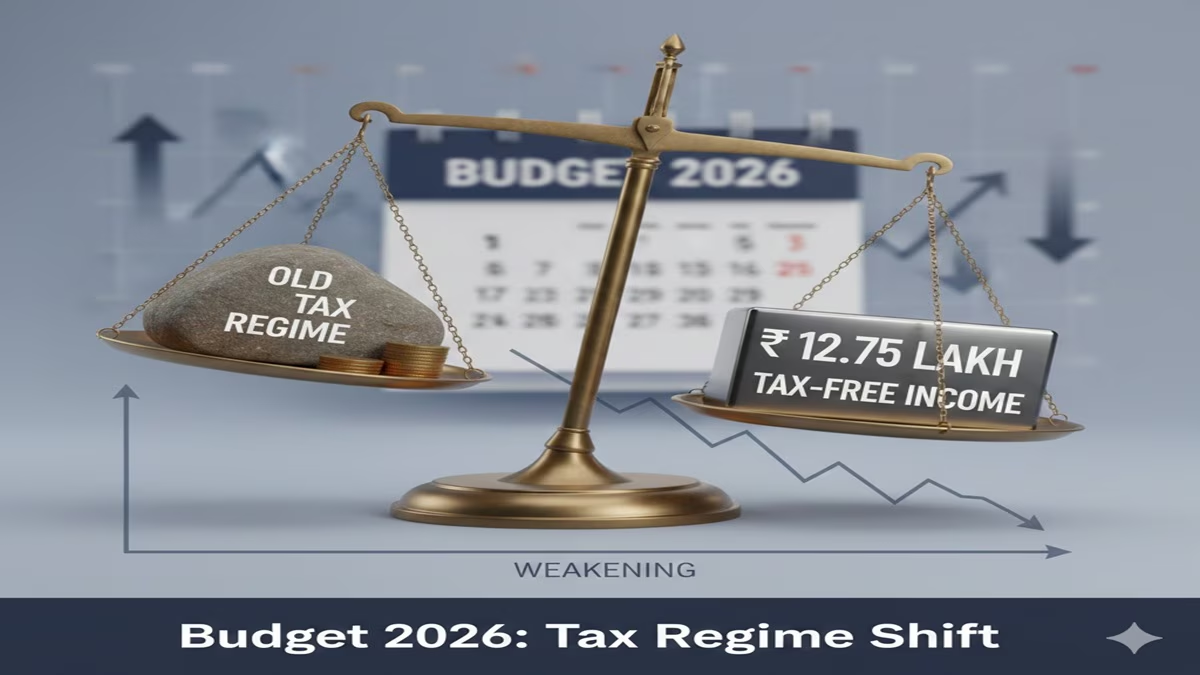
The ₹12 Lakh Paradigm Shift
For years, Chartered Accountants and seasoned traders stubbornly clung to the Old Tax Regime. The ability to claim Section 80C (LIC, ELSS), 80D (Health Insurance), and Home Loan interest (Section 24b) created a comfortable tax shield.
However, the 2026 financial landscape has fundamentally rewritten the rules of wealth retention. The government has aggressively incentivized the New Tax Regime by introducing a monumental update: a full tax rebate (under Section 87A) for total income up to ₹12,00,000.
If your total net F&O business income (plus any other part-time consulting or salary) is ₹11,90,000, your income tax liability under the New Regime is exactly ₹0. Under the Old Regime, even if you maxed out your ₹1.5 Lakh 80C limit and ₹50,000 NPS limit, you would still be handing over a massive chunk of your trading capital to the taxman.
The Danger Zone: Crossing the Threshold
In the 2026 New Tax Regime, earning ₹11,90,000 means your tax liability is exactly ₹0 (thanks to the Section 87A rebate). But if your net income crosses to ₹12,10,000, you don't just pay tax on the extra ₹20,000. You lose the rebate entirely, and your tax bill suddenly spikes to roughly ₹1,00,000+ based on the slab rates.
This creates a massive "Tax Cliff." If your gross F&O profits are sitting in the "Danger Zone" (between ₹12 Lakhs and ₹15 Lakhs), your primary goal before March 31st is to legally reduce your Net Taxable Income below ₹12 Lakhs.
Because F&O trading is classified as a Business, you can achieve this by maximizing your legitimate "Cost of Doing Business."
The New Slabs vs. The Old Slabs (FY 2025-26 / AY 2026-27)
To understand why institutional money and retail professionals are migrating, you have to look at the raw slab mathematics. The 30% tax bracket—the absolute destroyer of compounding—has been drastically delayed in the New Regime.
The 2026 New Tax Regime Slabs
₹0 to ₹4 Lakh: Nil
₹4 Lakh to ₹8 Lakh: 5%
₹8 Lakh to ₹12 Lakh: 10% (Effectively 0% if total income is ≤ ₹12 Lakh due to rebate)
₹12 Lakh to ₹16 Lakh: 15%
₹16 Lakh to ₹20 Lakh: 20%
₹20 Lakh to ₹24 Lakh: 25%
Above ₹24 Lakh: 30%
The Old Tax Regime Slabs
₹0 to ₹2.5 Lakh: Nil
₹2.5 Lakh to ₹5 Lakh: 5%
₹5 Lakh to ₹10 Lakh: 20%
Above ₹10 Lakh: 30%
The F&O Impact: Under the Old Regime, the moment your trading profits cross ₹10 Lakhs, you are immediately slammed with a 30% tax rate. In the New Regime, you don't hit the 30% bracket until you cross ₹24 Lakhs in profit. That ₹14 Lakh buffer at lower percentages is a massive structural advantage for swing traders and algorithmic scalpers.
Tactic 1: Maximizing Direct Trading Expenses
Many retail traders forget that the money they pay to their broker is fully deductible. Before you calculate your net profit, you must subtract:
Brokerage Fees: Every ₹20 per order adds up. If you take 1,000 trades a year, that is ₹40,000 in deductible expenses.
Securities Transaction Tax (STT): Unlike equity delivery investors, F&O traders can claim STT as a valid business expense. For high-frequency options sellers, STT can easily exceed ₹1,00,000 annually.
Exchange & SEBI Turnover Fees: Fully deductible.
GST on Brokerage: The 18% GST you pay is also a deductible business expense.
Example: You have ₹13.5 Lakhs in gross profit. But you paid ₹1.5 Lakhs in combined Brokerage, STT, and taxes. Your Net Taxable Income is now exactly ₹12 Lakhs. You pay ₹0 in Income Tax.
Tactic 2: The Section 32 Depreciation Hack (The Hardware Upgrade)
If you are hovering at ₹13 Lakhs of profit in February, it is time to upgrade your trading desk. Under Section 32 of the Income Tax Act, computers and laptops used for business purposes attract a massive 40% depreciation rate.
The Execution: You buy a high-end, multi-monitor trading setup and a top-tier laptop for ₹2,50,000.
The Write-off: You cannot deduct the full ₹2.5 Lakhs at once, but you can deduct 40% (₹1,00,000) from your taxable income this year. (Note: If purchased after October 3rd, you can only claim half a year's depreciation, which is 20%).
The Result: Your taxable income drops from ₹13 Lakhs to ₹12 Lakhs. The laptop essentially paid for itself in tax savings.
Tactic 3: Software, Data, and Advisory
Information is the lifeblood of Dalal Street. If you pay for data, it is a business expense.
Charting Software: Annual subscriptions to TradingView Premium, Chartink, or Bloomberg Terminals.
Algorithmic APIs: Monthly fees paid to Kite Connect, Dhan HQ, or automated platforms like Tradetron.
Professional Fees: The fees you pay to a SEBI-Registered Investment Advisor (RIA) or your Chartered Accountant for tax filing/audits.
Tactic 4: Capital Splitting (The Spousal Demat)
If you are consistently making ₹20 Lakhs a year, no amount of laptop depreciation will get you under the ₹12 Lakh threshold. This is when you must split the capital.
If your spouse is a homemaker or has an income well below the ₹12 Lakh threshold, you can open a Demat account in their name.
The Catch (Clubbing of Income): You cannot simply gift them ₹10 Lakhs to trade with. Under Section 64, the profit generated from gifted money will be "clubbed" back into your income.
The Solution: You provide a Bona Fide Loan to your spouse at a reasonable interest rate (e.g., 6%). You draw up a formal loan agreement. Because it is a loan, the trading profits they generate belong entirely to them.
The Result: Your spouse makes ₹10 Lakhs in profit (paying ₹0 tax), and you make ₹10 Lakhs in profit (paying ₹0 tax). A combined ₹20 Lakh household income, entirely tax-free.
Why Traders Specifically Benefit
A salaried corporate employee might still find value in the Old Regime if they have a massive Home Loan, HRA, and LTA. But a full-time F&O trader operates a Business.
No Forced Investments: To save tax in the Old Regime, you must "lock up" ₹1.5 Lakhs in PPF or ELSS for years. A trader's biggest asset is liquidity. The New Regime gives you the tax benefit without forcing you to lock your capital away. You can deploy that ₹1.5 Lakhs directly into your BankNifty setups.
Business Expenses Remain Intact: This is the most misunderstood rule on Dalal Street. Switching to the New Regime removes personal deductions (80C, 80D), but it does not remove Business Expenses. Because F&O is Non-Speculative Business Income, you can still deduct your Brokerage, STT, TradingView subscriptions, internet bills, and laptop depreciation before calculating your final profit.
The Break-Even Point: When Does the Old Regime Win?
Mathematics is absolute. There is only one specific scenario where an active trader should remain in the Old Tax Regime in 2026.
To make the Old Regime mathematically superior, your total eligible personal deductions must cross a massive threshold—typically around ₹4.5 Lakh to ₹5 Lakh.
You should only choose the Old Regime if you check ALL of these boxes:
You pay over ₹2,00,000 annually in Home Loan Interest (Section 24b).
You max out Section 80C (₹1,50,000).
You max out Section 80CCD(1B) for NPS (₹50,000).
You pay incredibly high medical insurance premiums for yourself and senior citizen parents (Section 80D up to ₹75,000).
If you are a young trader renting an apartment and deploying your surplus cash back into the market rather than into PPF, the Old Regime is structurally obsolete.
💡 The "Margin of Safety" Calculation:
Deduct legitimate business expenses (like servers or assistants) to keep your net F&O profit below the ₹12 Lakh threshold. Dropping your income from ₹13 Lakhs to ₹11.9 Lakhs instantly zeroes out your tax bill.
Every rupee you legally claim as a business expense is a rupee shielded from the 30% tax slab. Reinvest your overhead savings directly into your margin account using SEBI’s T+0 settlement cycle to compound your growth.